
Packaging Selection
Induction Seal vs. Pressure-Sensitive Liners for Honey Squeeze Bottles
Compare induction and pressure-sensitive liners for honey squeeze bottles. Learn how resin, cap torque, fill residue and line setup affect leak performance.
Written by
Gracepack Honey Packaging Editorial Team
Packaging Content & Product Education. We turn the questions customers ask us about honey bottles, jars, caps, samples, filling and export packing into practical packaging guides.
Technical review by
Gracepack Honey Packaging Project Team
Container, Closure & Packing Review. Our project team checks guidance about model selection, fill-weight references, cap compatibility, samples, carton protection and delivery planning.
Reviewed October 14, 2026. Reviewed against Gracepack's current bottle, closure, sampling, packing, documentation and export-project workflow. Final compliance, filling-process and shelf-life approval remains specific to the selected packaging, honey product and destination market. See our quality and document approach.
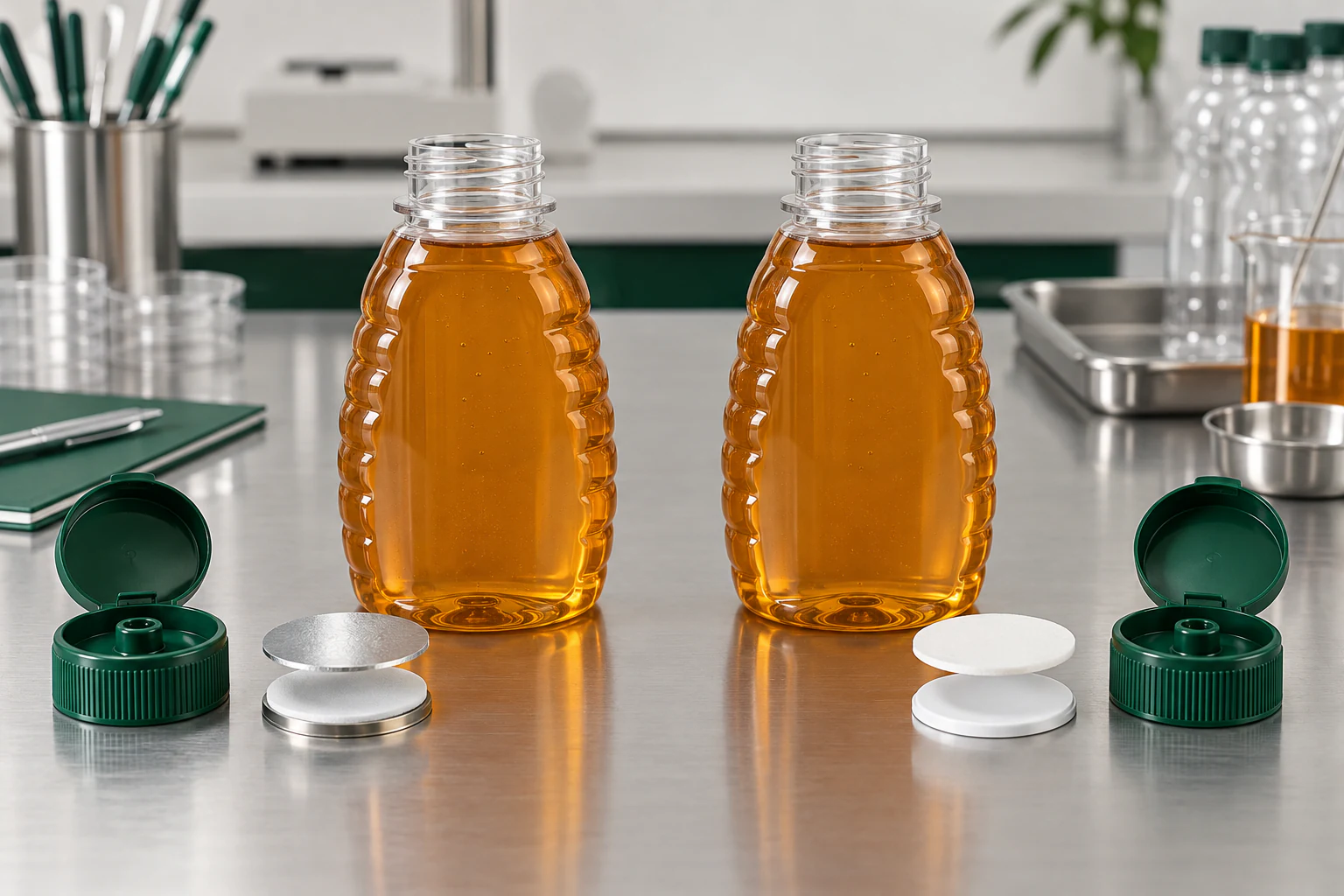
A wet shipping case rarely begins with the question “Which liner was cheapest?” It begins with a bottle, cap, liner and filling process that were never tested as one system. For unopened honey squeeze bottles, a correctly specified induction seal usually provides a stronger barrier and more dependable transport protection than a pressure-sensitive liner. That conclusion is useful, but incomplete: neither liner controls leakage after the consumer removes it, and induction sealing can still fail when the bottle resin, sealing land, cap pressure or production settings are wrong.
Define “Leakproof” Before Choosing a Liner
“Leakproof” is not a material name. It is a package performance result under defined conditions. A bottle that remains dry for ten minutes on a workbench may still seep after days on its side, a warm truck journey, air-freight pressure changes or repeated consumer squeezing. Before comparing liners, define the stage of use and the distribution risk.
Honey squeeze bottles have two distinct sealing lives. Before first opening, the inner seal can isolate the product from the dispensing outlet and support transport security. After the foil or adhesive disc is removed, the cap, valve, orifice and bottle threads carry the responsibility. A high-performing induction membrane cannot compensate for a valve that weeps after opening, and a good valve cannot protect an unopened bottle if the inner seal has a channel leak.
| Package stage | Primary leak-control components | Question to answer |
|---|---|---|
| Capped, before sealing | Bottle land, liner position, cap application torque | Is the liner held evenly against a clean, flat sealing surface? |
| Sealed and unopened | Bonded membrane or adhesive liner, bottle finish, closure | Will the package survive storage and distribution without seepage? |
| After first opening | Flip-top, nozzle or valve cap; threads; bottle recovery | Does the dispensing system reclose cleanly after each squeeze? |
| End of consumer use | Outlet geometry, hinge/valve durability, cap-down stability | Will residue, crystallization or repeated cycling create drips? |
How the Two Liner Systems Create a Seal
Pressure-sensitive liners rely on adhesive contact
A pressure-sensitive liner normally combines a backing material with an adhesive on the container-facing side. Tightening the cap presses the adhesive against the bottle land. The bond can continue to develop while the package rests, so an empty-bottle peel test immediately after capping does not necessarily represent final performance.
The attraction is operational simplicity: no induction generator or sealing head is required. The limitation is that adhesion depends on intimate contact, surface condition, cap pressure, adhesive compatibility and time. Product splash, condensation, dust, an uneven land or inconsistent hand capping can reduce the bonded area. A liner that sticks to a clean, empty bottle is not automatically suitable for honey in distribution.
Induction liners create a heat-activated bond
An induction liner contains a conductive foil layer and a container-facing heat-seal layer. After the filled bottle is capped, the package passes through an electromagnetic field. The foil heats, the sealant layer softens, and closure pressure keeps the liner against the bottle land while the bond forms and cools.
The heat-seal layer must match the container material. A liner intended for HDPE should not be assumed to seal PET, PP or glass. The closure also has to hold the liner flat and close enough to the appropriate sealing head. Induction gives the packager a controllable sealing process, but it also adds variables that must be documented.
One-piece, two-piece and easy-open constructions are not interchangeable
A one-piece liner leaves the closure without a secondary backing after the membrane is removed. A two-piece construction separates during sealing so that a backing remains in the cap. Peel tabs can improve opening ergonomics, while clean-peel and tamper-indicating constructions create different evidence after removal. Specify the desired consumer opening result rather than requesting “foil” alone.
Induction Seal vs. Pressure-Sensitive Liner: Honey-Packaging Comparison
For most retail, e-commerce and export honey packs, induction deserves the first trial because it bonds a membrane to the bottle land instead of relying only on pressure-activated adhesive. Pressure-sensitive liners still have a role, but that role should be defined by validated risk rather than by the absence of sealing equipment.
| Decision factor | Induction seal liner | Pressure-sensitive liner |
|---|---|---|
| Bonding method | Heat-activated sealant bonded to compatible container material | Adhesive contact developed under cap pressure |
| Additional equipment | Induction sealing system and suitable sealing head | No induction machine |
| Unopened liquid protection | Usually the stronger starting option when correctly specified and validated | Treat as unproven until the exact filled package passes testing |
| Inverted distribution | Appropriate to evaluate for sustained product contact and higher leak consequence | Higher-risk choice; do not approve from an empty-bottle adhesion test |
| Barrier design | Foil-based constructions can provide a strong barrier; structure varies | Barrier depends on the specific backing and adhesive construction |
| Tamper indication | Depends on peel, residue and package statement; not automatic | Usually weak because some constructions can be removed and replaced |
| Critical variables | Resin, land geometry, torque, foil position, power, line speed, cooling | Surface condition, adhesive compatibility, cap pressure, dwell and storage |
| After opening | No longer controls dispensing leakage after removal | No longer controls dispensing leakage after removal |
| Best fit | Commercial liquid packs with controlled sealing and meaningful distribution risk | Low-risk or short-run uses proven by application-specific testing |
Why Honey Is a Demanding Sealing Application
Honey does not splash like water at room temperature, but its viscosity does not make a marginal seal safe. A tiny channel can produce slow, sticky seepage that appears only after the bottle has remained on its side or cap-down. Once honey reaches the threads or carton, it attracts contamination, stains labels and makes a small defect commercially obvious.
Many bottlers warm honey to improve flow. Warm product can string from the nozzle and leave a thin deposit on the bottle land just before capping. That deposit interrupts adhesive contact and can also prevent a heat-seal layer from bonding uniformly. Filling control and a clean cutoff are therefore part of the sealing system.
- Use the actual honey, including its normal moisture content, temperature and crystallization tendency, during approval trials.
- Inspect the entire sealing land after filling; a clean-looking outer thread does not prove the top land is dry.
- Evaluate slow seepage over time, not only immediate gross leaks.
- Include side and cap-down orientations when the distribution or shelf presentation can place honey against the liner.
- After opening, test repeated squeeze, reclosure and storage cycles with the selected dispensing closure.
PET Bottle, Neck Finish and Closure Geometry Must Match the Liner
The liner diameter is not enough to define compatibility. The bottle supplier, closure supplier and liner supplier must agree on the container resin, neck finish, liner seat, land width and sealing construction. Even finishes that share a nominal diameter can differ in thread style and closure height.
Gracepack’s current catalogue illustrates why the model matters. Its PP flip-top caps for honey bottles are prepared around selected 28-400 and 38-400 formats, while the ribbed PET honey bottle series includes multiple 38-400 models. Those references help create a shortlist; the approved bottle drawing, selected cap, exact liner and physical sample must still be evaluated together.
Tall dispensing caps change the induction setup
A flip-top, nozzle or sports-style closure can place the foil farther below the top of the cap than a flat continuous-thread closure. That distance can weaken the field delivered by a standard flat sealing head. Enercon’s guidance explains that cap geometry and foil position can require tunnel or deep-tunnel head designs, especially for dispensing closures. Its induction sealing technical guide also identifies cap pressure and foil contact as major variables.
Do not solve a weak seal only by increasing power. Excess energy can distort the liner, overheat the land or narrow the operating window. Confirm the sealing-head geometry first, then establish a repeatable combination of head position, power and line speed.
Build a Repeatable Induction-Sealing Process Window
A good induction seal is the output of a stable process, not a single machine setting. Before the sealer, every capper head should deliver consistent application torque so the foil contacts the full land. At the sealer, the foil must pass through the intended field at a controlled distance and speed. After sealing, the polymer needs sufficient cooling before the cap is disturbed or the bond is evaluated.
Avoid publishing a universal torque, power or dwell time for honey bottles. A 28 mm flip-top, a 38-400 closure and a wide-mouth jar need different packages and may need different equipment. Use supplier guidance to define starting settings, then challenge them with actual production variation.
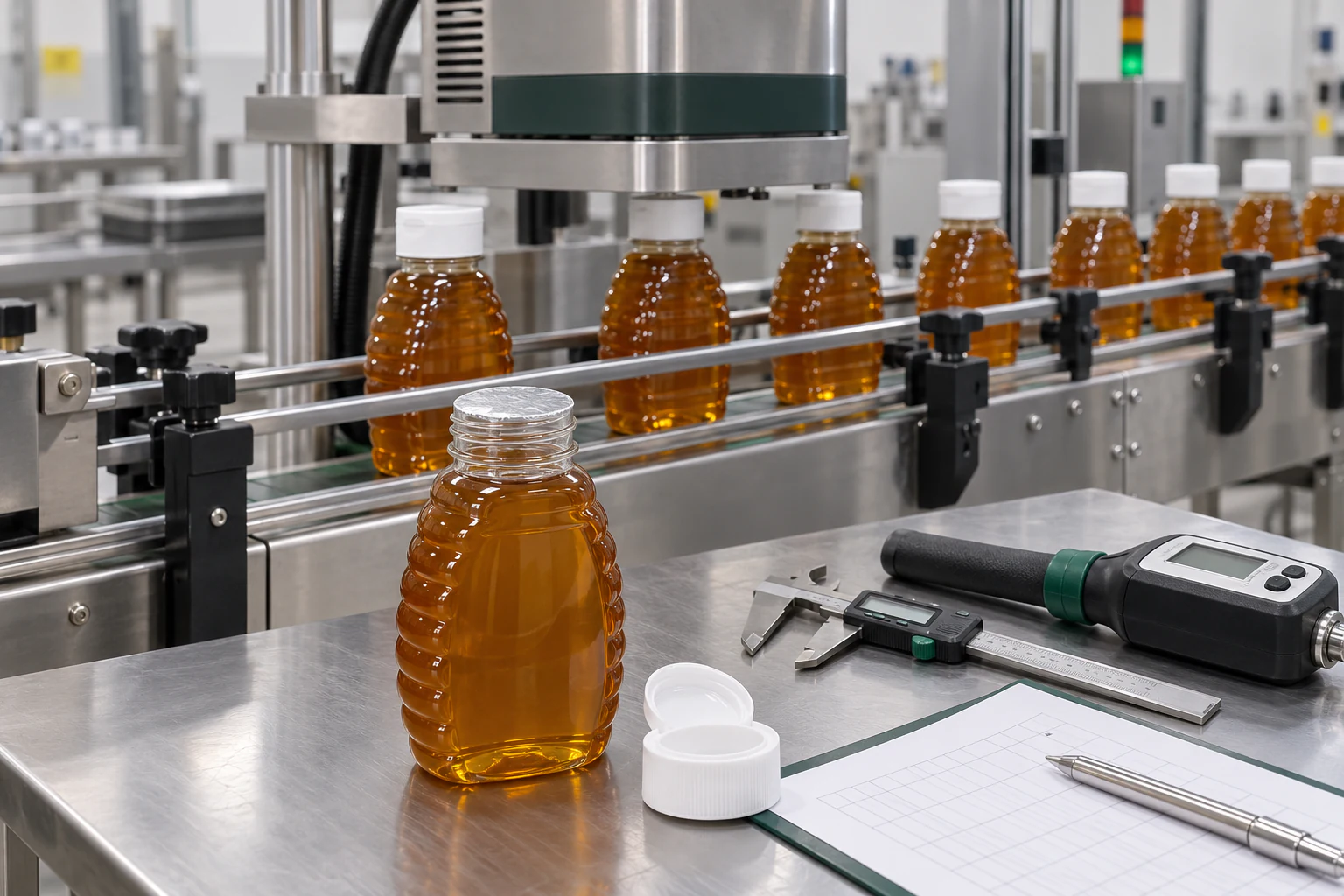
| Process variable | Too little or inconsistent | Too much or incorrect |
|---|---|---|
| Cap application torque | Incomplete liner-to-land contact and partial seal | Thread or bottle damage; closure distortion |
| Induction energy | Unbonded areas, easy lift and channel leaks | Overheated liner, scorched backing or distorted land |
| Line speed or dwell | Insufficient heat transfer | Excess heat exposure and reduced process margin |
| Sealing-head position | Weak or uneven field at the foil | Poor alignment or unnecessary heating of nearby components |
| Cooling and handling | Bond disturbed before it develops | Long delay without process benefit; hidden throughput loss |
| Bottle-land cleanliness | Product creates an unsealed path | Cleaning step can damage or contaminate the pack if poorly controlled |
Validate the Complete Filled Package Before Release
Validation should answer whether the package survives its intended route, not whether one attractive sample can be peeled from a bottle. Define acceptance criteria before the trial and use samples from every relevant capper head. Record bottle lot, cap and liner lot, honey batch, fill temperature, torque, line speed, sealer setting and cooling time.
| Validation step | What to examine | Failure it can reveal |
|---|---|---|
| Incoming component check | Bottle land, cap seat, liner position and material identity | Wrong or damaged components before filling |
| Filled-bottle seal trial | Uniform bond after full cooling | Partial seal, wrinkling, overheating or contamination |
| Side and cap-down storage | Slow seepage around the membrane or threads | Channel leak missed by upright inspection |
| Temperature cycling | Panel shape, cap movement and seal continuity | Thermal stress and pressure-related weakness |
| Distribution simulation | Leakage, cap back-off, bottle damage and carton staining | Vibration and impact failures |
| Opening evaluation | Peel force, tab access, residue and visible evidence | Poor consumer experience or ambiguous first opening |
| Post-opening use test | Dispense, cutoff, reclosure and repeated squeeze cycles | Valve or flip-top leakage unrelated to the removed liner |
Tamper evidence must be described carefully
An induction liner can support visible first-opening evidence, but the result depends on its construction and how the package communicates the feature. A clean-peel membrane, a liner that leaves residue and a printed reveal layer do not create the same consumer signal.
FDA guidance for certain over-the-counter drug packages notes that heat-induction seals can offer stronger tamper resistance than adhesive-dependent mouth seals, while also stating that using a listed technology does not by itself establish compliance. That FDA tamper-resistant packaging guidance applies to specified regulated products, not as a blanket approval for honey packaging. Use it to understand the design principle, then confirm the food-packaging requirements in the destination market.
Choose the Closure System Around Distribution and Consumer Use
A pressure-sensitive liner may be reasonable for an internal sample, a dry product or another low-risk project where the exact construction has passed the required testing and induction equipment is not available. It should not be selected for a liquid simply because a marketplace listing describes it as “non-spill.” For retail, e-commerce or export honey, the commercial consequence of a leak often justifies testing induction first.
For cap-down packs, evaluate the unopened membrane and the opened dispensing system separately. Gracepack’s valve caps for inverted honey bottles combine a PP base with a silicone valve option for compatible assemblies, while compact inverted honey bottles include model-specific 28-400 formats. These catalogue details establish possible combinations; they do not replace a filled-package leak trial with the chosen liner and valve.
| Project condition | Preferred starting direction | Required confirmation |
|---|---|---|
| Retail or e-commerce honey | Induction liner | Filled-package sealing window and distribution test |
| Export or prolonged cap-down exposure | Induction liner plus validated dispensing closure | Thermal, orientation and transport testing before and after opening |
| Small local trial without induction equipment | Pressure-sensitive only if risk is acceptable | Adhesive compatibility, dwell and filled-package testing |
| Inverted consumer pack | Induction for unopened protection; valve for opened use | Separate seal and repeated-dispensing protocols |
| Tall flip-top or nozzle cap | Induction with equipment review | Foil position and sealing-head compatibility |
What to Send With a Bottle-and-Closure Sample Request
A useful sourcing inquiry asks for a testable system rather than an “ultimate leakproof cap.” Provide the target bottle volume and honey net weight, container material, neck finish, closure style, liner preference, fill temperature, line speed and destination route. State whether bottles travel upright, on their side or cap-down, and whether the pack is opened once or repeatedly squeezed over several weeks.
Gracepack can use that brief to identify current bottle and closure candidates for drawing and sample review. The approval record should lock the bottle model, neck finish, cap, liner construction, color, drawing revision and physical sample. Induction-sealer settings and final acceptance criteria remain part of the bottler’s production validation.
- Bottle model, resin and confirmed neck finish
- Cap style, liner seat and desired opening experience
- Actual honey condition and planned filling temperature
- Manual, semi-automatic or automatic capping method
- Induction-sealer type, sealing-head design and target line speed
- Distribution route, carton orientation and temperature exposure
- Leak, peel, tamper-indication and post-opening dispensing requirements
Honey Bottle Liner FAQs
Can pressure-sensitive liners be used with honey?
They should not be assumed suitable simply because honey is viscous. Approve a pressure-sensitive liner only when the exact adhesive, bottle surface, cap pressure, honey contact and distribution conditions have passed filled-package testing.
Does an induction seal prevent leakage after opening?
No. Once the consumer removes the membrane, leakage is controlled by the dispensing cap, valve, bottle threads and reclosure behavior. Test unopened transport and opened consumer use as separate stages.
Which induction liner should be used on a PET honey bottle?
Use a liner whose container-facing heat-seal layer is specified for PET and whose diameter and construction match the selected cap and bottle land. Confirm the complete assembly with the liner supplier, drawing and physical sealing trial.
Can a flip-top cap pass through an induction sealer?
Often yes, but a tall or recessed flip-top can place the foil too far from a standard flat sealing head. The line may require a tunnel or deep-tunnel head and application-specific setup.
Why does an induction membrane bond on only part of the bottle mouth?
Common causes include uneven cap pressure, incorrect liner material, honey or moisture on the land, a damaged finish, poor sealing-head alignment, insufficient energy or excessive line speed. Diagnose the full process before increasing power.
Is every induction liner tamper-evident?
No. Peel behavior, residue, reveal features and package labeling determine how clearly first opening is shown. Specify the required consumer evidence and confirm it on production samples.
Can 38-400 and 38-410 closures use the same liner?
Do not assume so. The nominal diameter is only one dimension. Closure height, thread engagement, liner seat, bottle land and supplier specifications must all match.
How should an inverted honey bottle be leak-tested?
Test the sealed bottle cap-down and on its side under representative storage, temperature and distribution conditions. After removing the membrane, repeat use cycles to evaluate the valve or flip-top separately.
Related Products
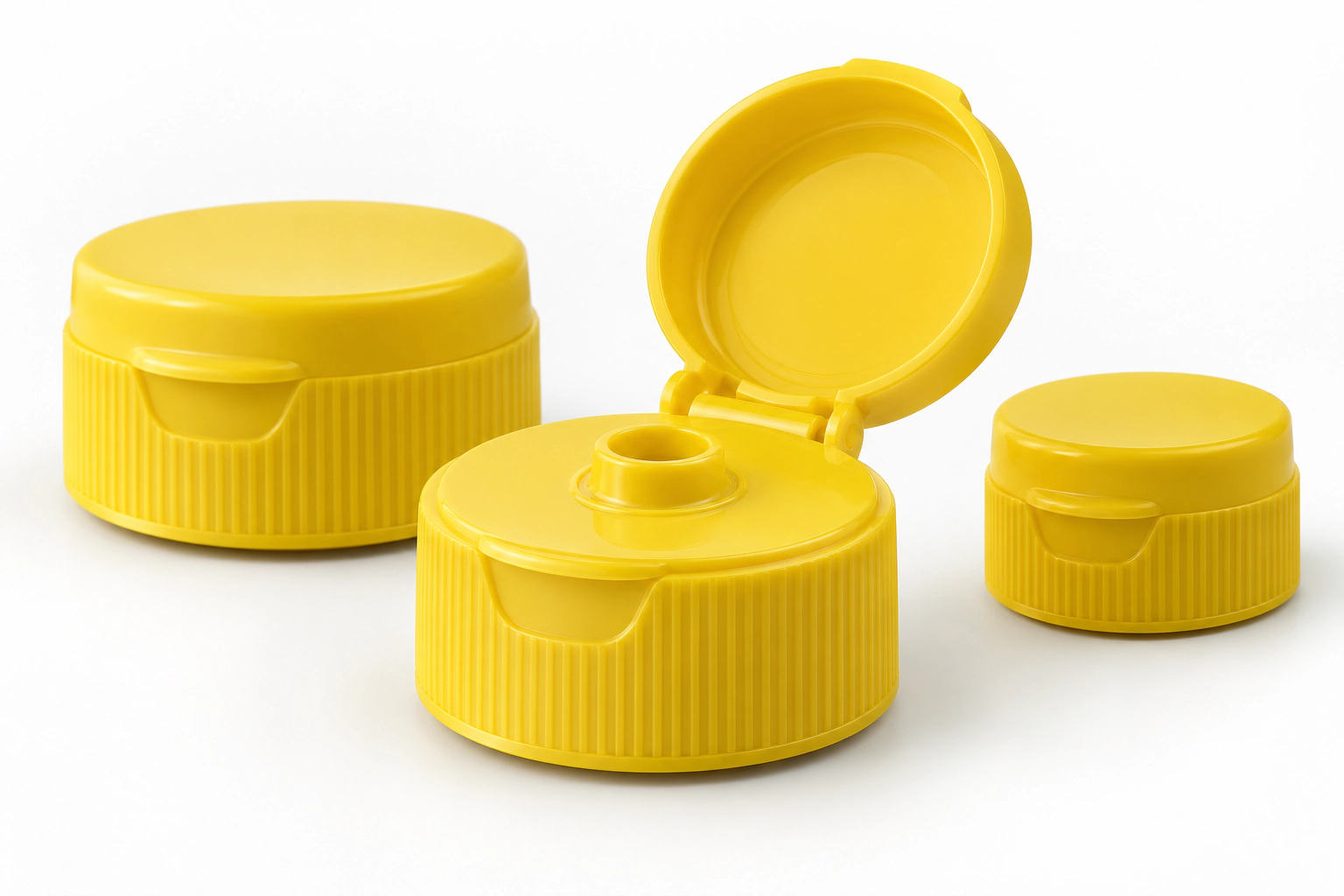
PP Flip-Top Caps for Honey Bottles
We supply PP flip-top caps for compatible upright PET honey squeeze bottles.
1 option
View specifications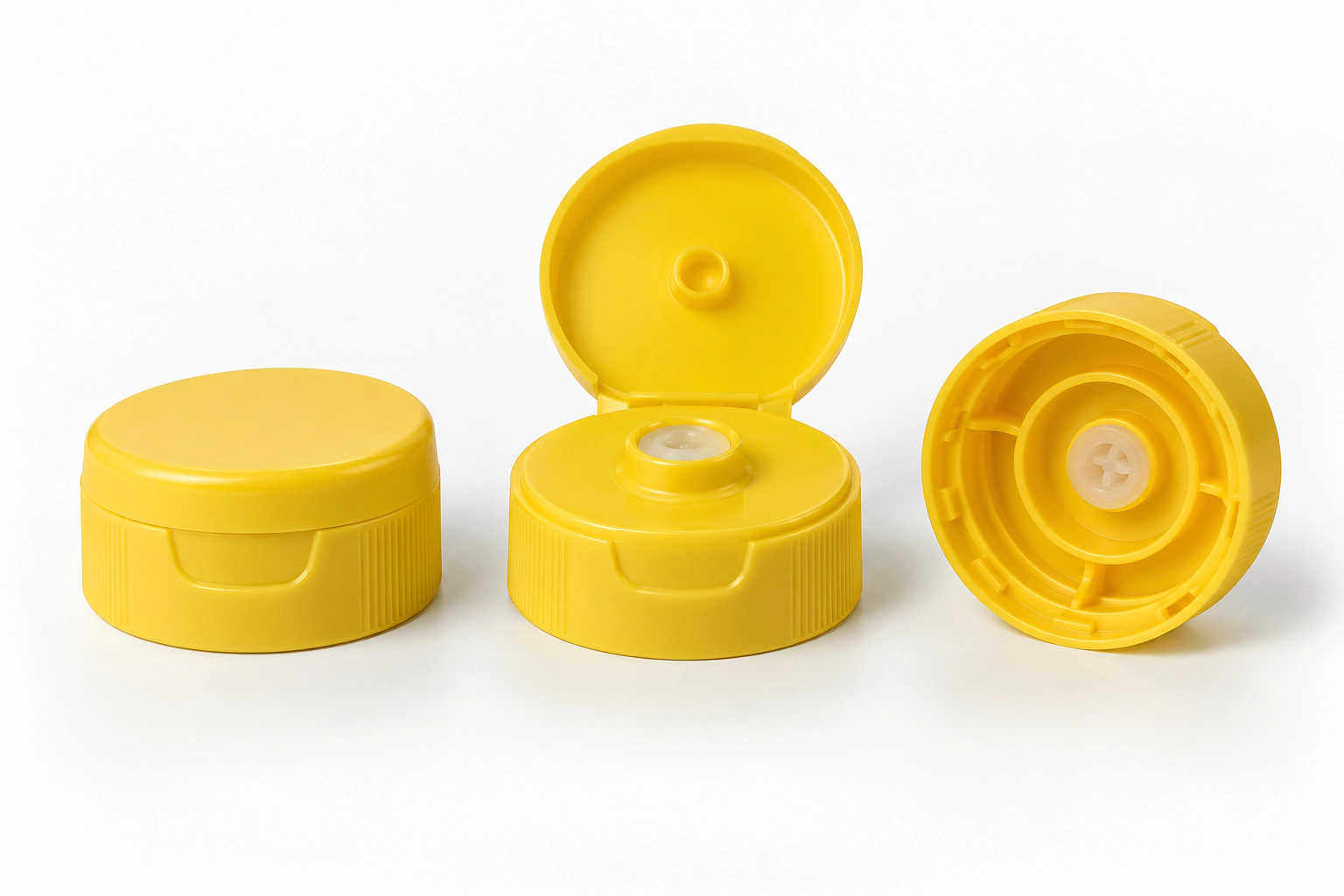
Valve Caps for Inverted Honey Bottles
We supply wide-base PP closures for inverted PET honey bottles, developed for stable cap-down presentation and controlled dispensing.
1 option
View specifications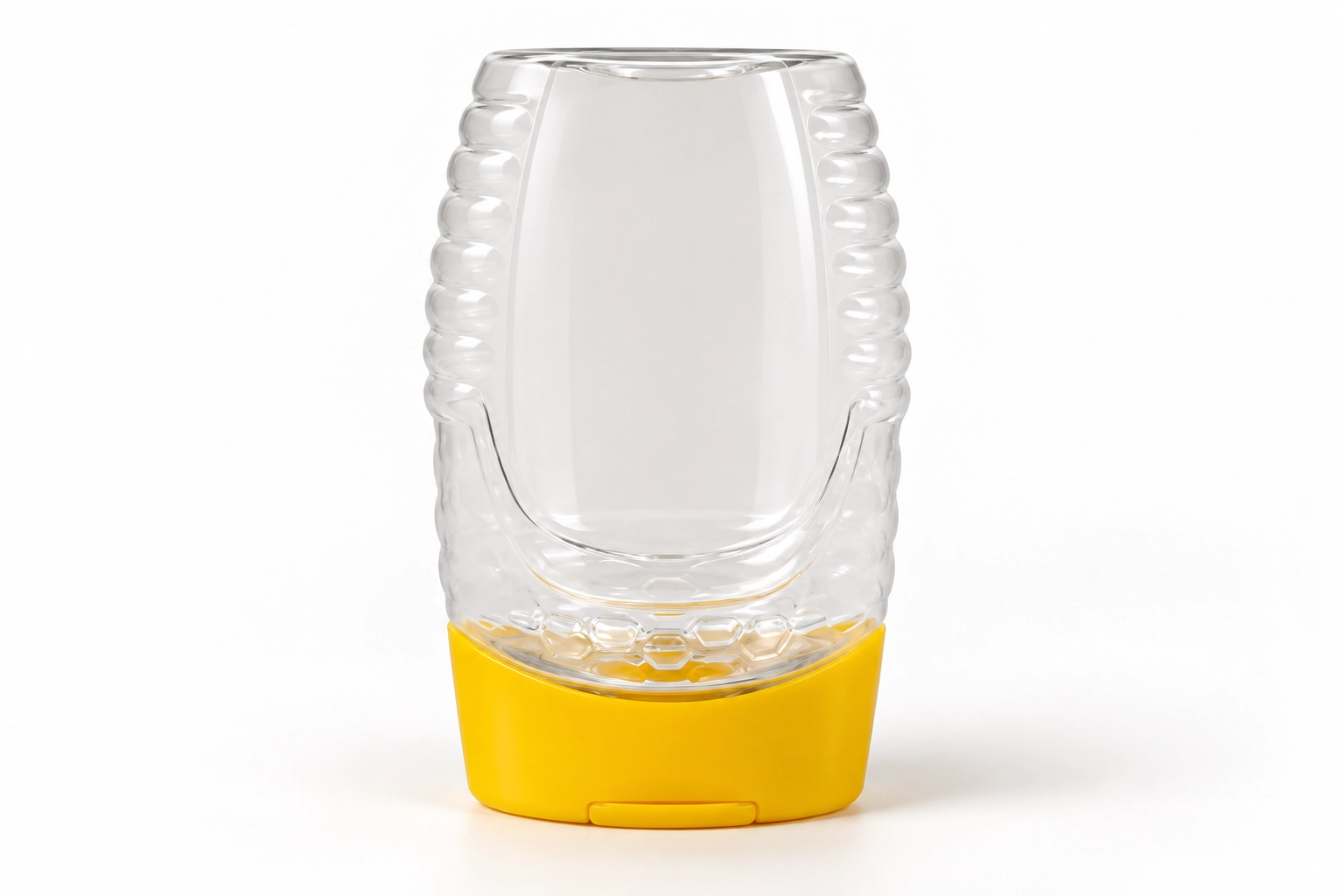
Compact Inverted Honey Bottles
Choose from eight clear PET cap-down honey bottle models in 250–380 ml capacities.
8 options
View specifications