
Packaging Selection
The Modern Plastic Honey Bear Bottle: Balancing Iconic Heritage with Industrial Performance
Compare PET and LDPE honey bear bottles for label panels, squeeze feel, line handling and closure fit before wholesale orders or custom mold development.
Written by
Gracepack Honey Packaging Editorial Team
Packaging Content & Product Education. We turn the questions customers ask us about honey bottles, jars, caps, samples, filling and export packing into practical packaging guides.
Technical review by
Gracepack Honey Packaging Project Team
Container, Closure & Packing Review. Our project team checks guidance about model selection, fill-weight references, cap compatibility, samples, carton protection and delivery planning.
Reviewed October 15, 2026. Reviewed against Gracepack's current bottle, closure, sampling, packing, documentation and export-project workflow. Final compliance, filling-process and shelf-life approval remains specific to the selected packaging, honey product and destination market. See our quality and document approach.
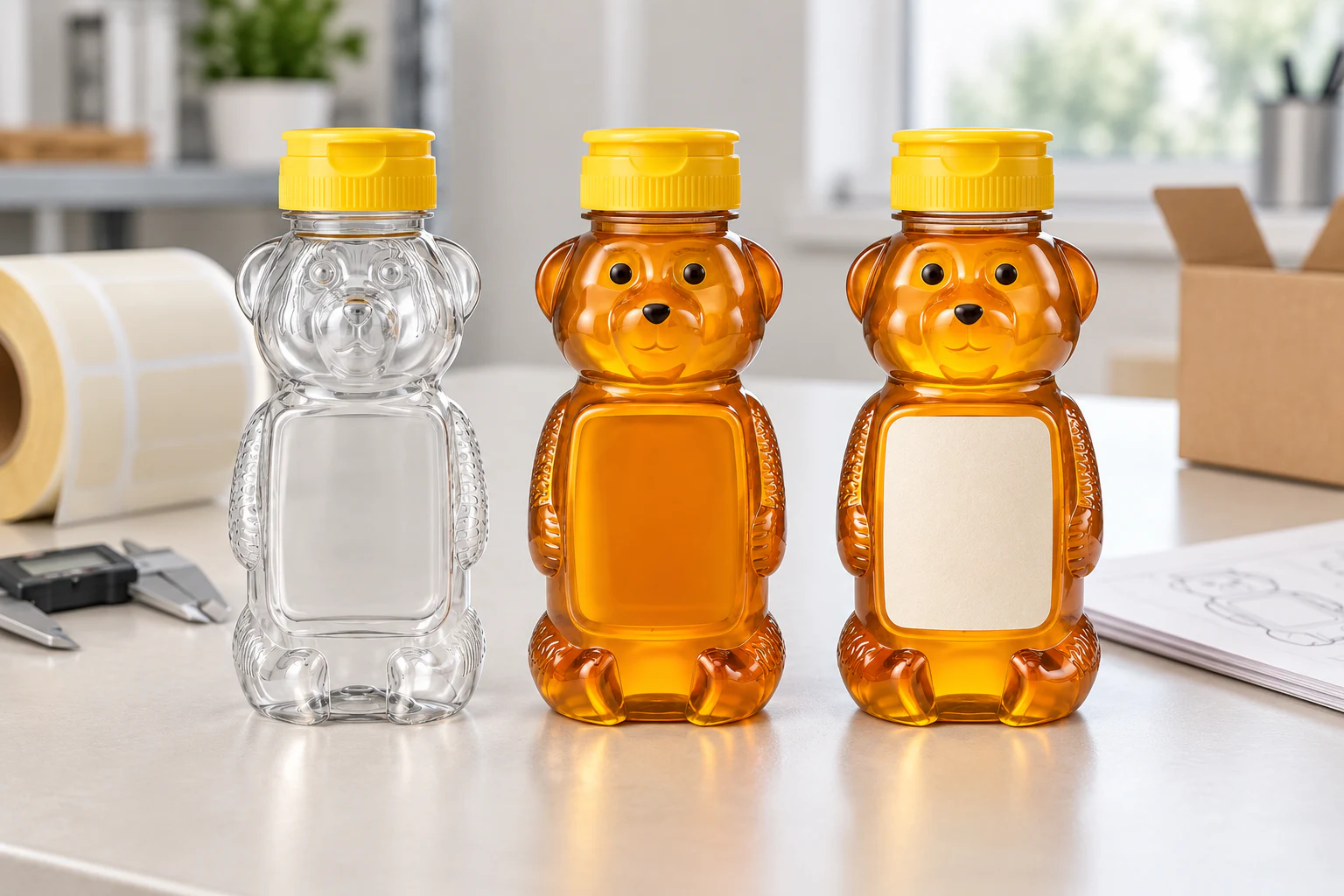
The honey bear is one of the rare packages that can identify its product before a shopper reads a word. That instant recognition explains why it remains common at American farm stands, specialty grocers and family breakfast tables. It also hides an engineering challenge. Ears, arms, paws and molded fur create the personality, but every extra contour complicates material distribution, bottle handling and label application. A successful bear bottle must therefore work as a complete packaging system, from filling and labeling to squeezing at the breakfast table.
Why the Honey Bear Still Wins Recognition—and Where It Can Lose Premium Appeal
The modern plastic honey bear traces its commercial history to 1957. An obituary for Dutch Gold Honey founder W. Ralph Gamber records that his company introduced the bear-shaped plastic container that year, linking an easy-to-squeeze package with the familiar storybook association between bears and honey. That honey bear bottle history matters because it explains why the silhouette still works as visual shorthand in North American retail.
Recognition lowers the amount of explanation required at a farmers market table or in a crowded grocery aisle. The molded face catches attention, clear walls display varietal color, and a yellow cap reinforces the category code. Smaller bears can suit commercial samples and portion sizes, while larger formats support family-size retail lines. For a new brand without national advertising, the package itself can do part of the merchandising work.
That familiarity is not automatically premium. Some shoppers associate the classic bear with blended, everyday or family-value honey. A single-origin, raw or luxury-positioned product may need more restrained graphics, a different closure color or another container shape to support its price. The bear works best when its shape, graphics and closure reinforce the exact retail promise the brand is making.
The label should add provenance, floral source and required product information without covering the character that made the bottle recognizable. When the artwork overwhelms the molded face and body, the brand pays for a shaped package and then visually turns it back into a rectangle.
PET vs. LDPE: Choosing Clarity, Squeeze Force and Shape Recovery
PET and LDPE can both produce a squeezable bear, but they create different experiences. PET normally provides higher clarity, gloss and shelf definition. It lets shoppers see the honey color and fill level, and its relatively firm body can help a front label remain readable. LDPE is softer and easier to deform, which can help users dispense viscous honey, but it is usually less glass-clear and its label surface moves more during use.
Neither resin guarantees a particular squeeze force. Bottle mass, wall distribution, body geometry, panel depth, honey temperature and outlet size all affect what the consumer feels. PET should not be described as a soft-touch material simply because the bottle can be squeezed, and polypropylene is more commonly relevant to the cap in this application than to the clear bear body.
A useful material choice starts with the intended moment of use. A PET bear may be appropriate when the pack needs bright shelf presentation and must recover to a tidy silhouette after moderate squeezing. An LDPE bear may be preferable when low hand force is more important than optical clarity. Run both candidates with the actual honey if the audience includes children, older consumers or food-service staff who dispense repeatedly.
| Decision factor | PET bear bottle | LDPE bear bottle | Practical result |
|---|---|---|---|
| Product visibility | High clarity and gloss are typical | Usually translucent rather than glass-clear | Decide how strongly the pack must showcase honey color |
| Squeeze response | Firmer; strongly affected by geometry and bottle mass | Softer and easier to deform in many designs | Test with the real honey at serving temperature |
| Shape recovery | Can return to a defined shelf shape when well designed | Flexible but may show more movement or panel distortion | Cycle filled bottles rather than judging one empty sample |
| Label stability | A firm, flat panel can support accurate labeling | Panel movement can challenge label stock and adhesive | Approve label material on filled, squeezed samples |
| Typical visual role | Clear retail presentation and precise molded detail | Functional squeeze experience | Match resin choice to brand and user priorities |
Engineering Flat Label Panels for High-Speed Pressure-Sensitive Labeling
A bear is almost the opposite of an easy labeling shape. The face projects forward, the shoulders change width, the arms frame the torso and the belly may curve in two directions at once. A pressure-sensitive label that bridges those features can wrinkle at the center, lift at the corners or flag when the bottle flexes. The decorative details need to stop where the label-safe surface begins.
Flat-panel bears address this by creating one or two defined rectangles on the torso. A single-panel version reserves the front for branding and may use another method for regulatory information. A two-panel version can carry a front brand label and a back ingredient, nutrition or barcode label. A belly bear without a true panel depends more heavily on small labels, direct decoration or a carefully developed sleeve.
The usable label area is not the bottle’s maximum width and height. It is the portion that remains sufficiently flat after molding, filling and squeezing, with clearance from the panel radius, mold parting line, arm texture and lower-body transition. Use a dimensioned bottle drawing, build the artwork at actual size and apply production-intent labels to physical samples before approving a print run.
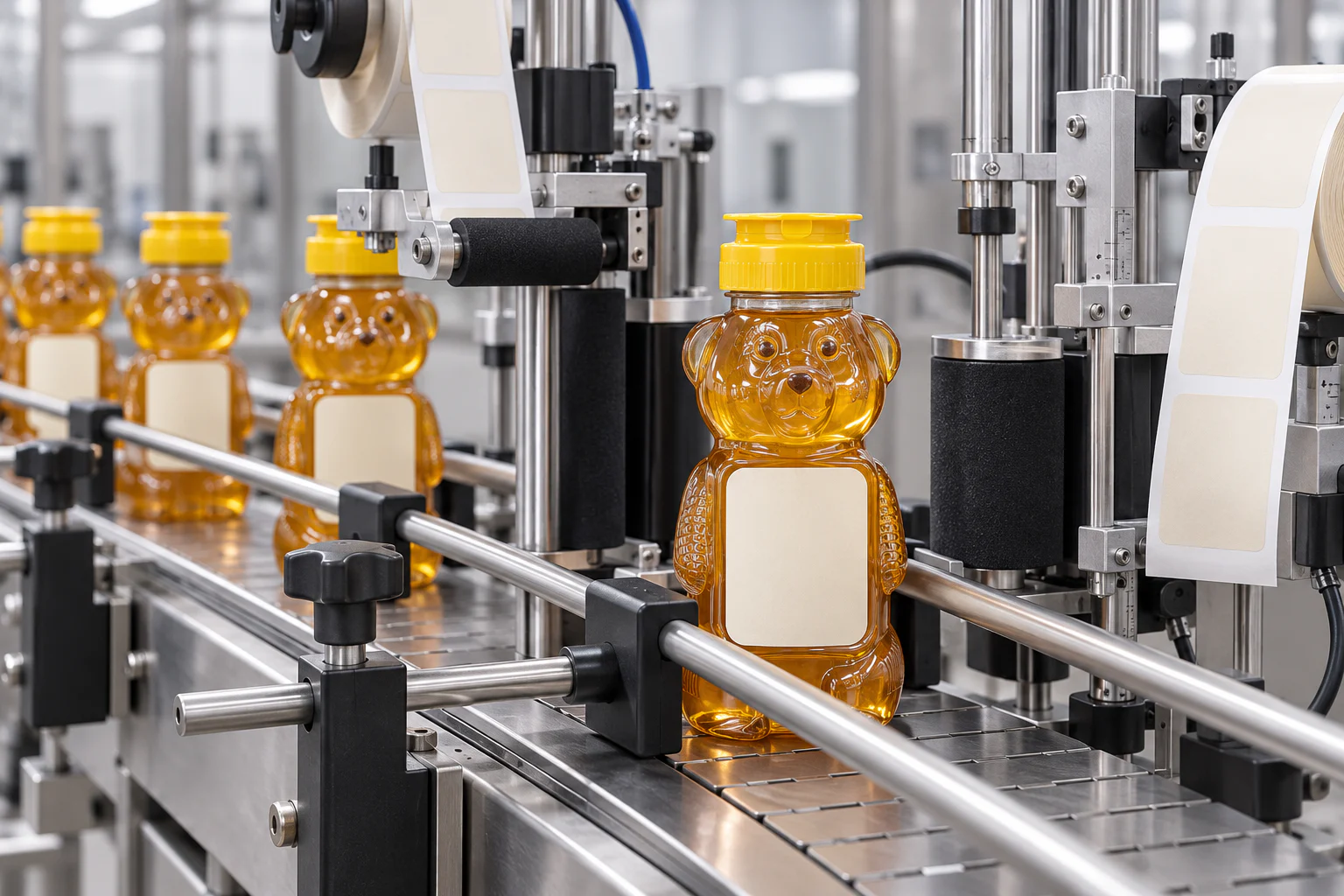
For a flat-panel bear, front-and-back pressure-sensitive labeling is normally a more logical starting point than a roll-fed wrap-around label. Wrap-around systems favor cylindrical surfaces; an irregular bear needs orientation and controlled presentation to the applicator. A full-body shrink sleeve can cover complex geometry, but the artwork must be compensated for distortion around ears, arms and changing body sections.
One commercial honey-packing line used front-and-back pressure-sensitive labels on bear-shaped PET containers, with the equipment rated for speeds up to 200 containers per minute. The honey bear labeling-line installation shows what this format can achieve under controlled conditions. Actual output still depends on bottle orientation, container tolerances, applicator setup and changeover discipline.
Label-panel approval checklist
- Confirm front and back usable-panel dimensions on the current bottle drawing and a physical sample.
- Keep artwork, barcode quiet zones and label corners away from panel radii, ribs and the mold parting line.
- Specify label face stock, adhesive, varnish or laminate for the expected humidity, temperature and squeeze cycles.
- Run empty and filled bottles through the orientation and applicator system at increasing speeds.
- Check skew, wrinkles, corner lift and barcode readability immediately and after storage.
- Repeat consumer squeeze cycles, because a label that looks good before opening may fail after the panel flexes.
Squeeze Dynamics: Grip, Wall Distribution and Shape Recovery
The familiar “fur” and paw details can do useful mechanical work. Fine texture can improve grip when hands are wet or sticky, and well-placed ribs can help a bottle resist uncontrolled buckling. Those features still have to be blow-molded consistently. Deep recesses and abrupt transitions demand material that might otherwise reinforce the panel, shoulder or base.
Honey is easier to dispense when warm and much slower when cool or partly crystallized. A bottle approved with an empty-hand squeeze may feel completely different after it is filled with dense honey from a cool pantry. Outlet diameter and closure design can change the required force as much as the body shape. The package team should therefore evaluate body compression and dispensing as one action.
Observe where the user naturally grips the bear. If the hand covers the label, graphics may scuff or distort. If squeezing occurs mainly through the flat panel, a rigid label can resist the motion or lift at the corners. If the arms are the only grip features, the body may need additional compliance elsewhere. There is no universal correct rib pattern; the molded geometry should direct deformation without leaving a permanent dent.
Recovery matters after every serving. A bear that remains collapsed looks partially empty and can become unstable. Test a filled sample through repeated dispense-and-release cycles, then store it upright and inspect the body, label and base. Include the lowest likely serving temperature and honey condition in the protocol rather than using only freshly warmed product.
- Measure filled-bottle standing stability before and after repeated squeezing.
- Record the user grip location and whether the label interferes with compression.
- Check for whitening, creasing, panel oil-canning and delayed shape recovery.
- Evaluate clean cutoff and residual honey around the dispensing outlet.
- Repeat the test with each closure option because outlet geometry changes hand force.
Running Bear Bottles Through Filling, Capping and Labeling Lines
A sculpted bottle needs predictable machine contact points. The base must sit flat enough for transfer and accumulation, while the shoulders or lower body should meet guide rails without rocking the bottle onto an ear, arm or protruding belly. If an unscrambler or orienter is involved, the line needs a reliable feature that distinguishes front from back without damaging the molded detail.
The neck should present consistently beneath the filling nozzle. Honey can string after cutoff and contaminate the finish or shoulder, so nozzle timing and suck-back deserve attention before increasing line speed. The capper then needs sufficient bottle control to apply the selected closure without spinning or deforming the bear body.
Labeling adds another orientation requirement. The machine must place the front artwork within the panel rather than merely somewhere on the broad side. Track angular error, vertical registration, wrinkles and corner lift by position on the line. A reject-rate log is more useful than a single attractive sample because it reveals intermittent guide, sensor or applicator problems.
Begin with a controlled pilot run. Establish a stable low-speed window, inspect filled and labeled bottles, then raise speed in documented steps. A line advertised for a certain number of round bottles per minute may not achieve that output with an irregular bear. The acceptance speed is the rate that repeatedly meets fill, cap, label and handling criteria.
| Line stage | Bear-bottle risk | What to verify |
|---|---|---|
| Unscrambling and orientation | Bottle presents at random angles or snags on molded features | Repeatable orientation feature and gentle handling |
| Conveying | Rocking, scuffing or unstable guide-rail contact | Base flatness, contact points and rail spacing |
| Filling | Off-center neck or honey stringing | Nozzle alignment, cutoff and clean bottle land |
| Capping | Body spins, cap cross-threads or torque varies | Bottle restraint and matched neck/closure specification |
| Labeling | Artwork misses panel or corners lift | Orientation accuracy, label geometry and applicator setup |
| Case packing | Ears or caps rub and bottles lean | Partition, count, assembled height and transport orientation |
Cap Pairings: Flip-Tops, Spout Caps and Traditional Yellow Bear Hats
The cap changes both the character and the usability of a bear bottle. A plain yellow screw cap preserves the traditional “hat” appearance and can suit a simple pour opening. A flip-top supports frequent household use without a separate loose cap. A pointed spout can provide more directional dispensing, while a valve closure can improve cutoff when the full bottle-and-product combination is designed for it.
Do not select by color and nominal diameter alone. Neck finish, thread engagement, liner seat, cap height and outlet geometry all matter. Gracepack’s PP flip-top caps for honey bottles include selected 28-400 and 38-400 routes, but the final cap, liner, color and fit must be confirmed against the chosen bottle model and assembled sample.
Unopened protection and post-opening cleanliness are separate jobs. An induction or other inner seal may support transport and first-opening evidence, but it no longer controls leakage after removal. The flip-top, spout or valve must then cut off honey cleanly and reclose through repeated use. Test both stages with the actual pack.
| Closure route | Consumer advantage | Engineering check |
|---|---|---|
| Traditional screw cap | Familiar bear appearance and simple construction | Opening size, liner choice and cap handling |
| Flip-top cap | One-handed reclosure for repeat use | Hinge clearance, outlet size and cutoff |
| Pointed spout | Directed stream for drizzling | Tip closure, crystallization and cleaning |
| Valve closure | Controlled dispensing and improved post-use cutoff | Honey viscosity, valve compatibility and repeated cycles |
Select a Stock Bear Bottle Before Investing in a Custom Mold
A stock bottle lets a brand validate product weight, shelf fit, label artwork and closure performance before committing to tooling. Gracepack’s 250 ml PET honey bear bottle is listed with a 38-400 finish and an approximate 350 g reference honey fill. The 320 ml PET honey bear bottle uses a 38-400 route and has an approximate 450 g reference fill. These figures are useful starting points, not guaranteed declared weights.
Honey density varies, and the final fill also depends on temperature, target fill line and headspace. Confirm net weight on a calibrated scale with the customer’s honey. Then check assembled height, panel artwork, cap operation and carton arrangement. A catalogue capacity should never replace the filled sample approval that determines what the package can legally and practically carry.
For a wider shortlist, Gracepack’s PET honey bear bottle options include several molded profiles and capacities, with model-specific neck finishes. Bear shapes are not interchangeable. Face details, grip proportions, label panels and cap routes differ, so artwork and drawings should be approved for the quoted model rather than transferred from another bear by visual similarity.
Documentation should remain equally specific. Gracepack holds an SGS report for a tested colorless transparent PET bottle sample under US FDA 21 CFR 177.1630 extractives requirements. That report can support a review only when its sample description and scope are matched to the supplied item. Ask the supplier to connect the quotation, bottle model, material statement, applicable report and approved sample instead of treating one document as blanket coverage for every bottle.
| Gracepack starting point | Listed specification | Approval still required |
|---|---|---|
| 250 ml PET bear, model G-41 | Approx. 350 g honey; 38-400 | Actual fill, drawing, label and assembled cap |
| 320 ml PET bear, model G-05 | Approx. 450 g honey; 38-400 | Actual fill, drawing, label and assembled cap |
| Multi-model PET bear range | 60–360 ml catalogue routes | Model-specific neck, artwork, closure and packing |
Custom Mascot and Honeycomb Bottles: From Concept to Line Trial
Custom tooling becomes reasonable when the package itself must be a defensible brand asset, the expected volume can absorb development cost, and a stock bear cannot meet the label, line or closure brief. The design process should begin with net weight, resin, retail channel and equipment constraints. Starting with an unconstrained character sketch often creates a shape that is memorable on screen but difficult to mold, orient, fill or pack.
Translate the mascot into controlled manufacturing geometry. Keep the neck centered, establish stable base and guide-rail contact, reserve a measurable label-safe zone, and simplify deep undercuts that can starve the wall of material. Honeycomb texture can add grip and category meaning, but it should not enter the label panel or create uncontrolled deformation during squeezing.
A useful development sequence is commercial brief, target net weight, resin and closure selection, 3D concept, design-for-manufacture review, prototype or trial tool, filled-product evaluation, labeling and capping trial, distribution test, and final drawing approval. Lock a physical golden sample alongside the drawing so future production has a visual and dimensional reference.
An experienced packaging supplier identifies conflicts among character detail, material distribution, label space, line handling and packing before steel is cut. Resolving them during the design stage reduces tooling changes and makes the first production trial more predictable.
- Define the target honey net weight and the acceptable fill line before finalizing volume.
- Select the neck finish and dispensing system while the body is still editable.
- Reserve front and back artwork zones with actual label radii and tolerances.
- Review bottle contact points for conveyors, guides, orienters and case packing.
- Approve the bottle only after filled-product, closure, label and transport trials.
What to Include in a Wholesale Honey Bear Bottle Inquiry
A useful inquiry gives the supplier enough information to recommend a testable package. State the target honey net weight, preferred resin, fill temperature, label method, artwork size, closure style, estimated order quantity and destination market. Include the intended filling, capping and labeling method, even if the first run will be manual. That context prevents a visually suitable bottle from being recommended for an incompatible process.
For a stock project, request the exact model drawing and an assembled bottle-and-cap sample. For a custom mascot, provide the expected annual volume, character priorities and the features that may be simplified to improve manufacturability. In both cases, agree that final suitability will be established by customer testing with the actual honey and production conditions.
Gracepack can use this brief to shortlist existing PET bears or define the scope of a custom review. The objective of the first conversation is not to force a tooling decision. It is to determine which stock or custom route can be verified with the least avoidable risk.
- Target honey net weight, bottle capacity and intended headspace
- Honey condition and planned filling temperature
- PET or LDPE preference and the reason for that preference
- Neck finish, cap style, outlet type, color and liner requirement
- Front/back label method, actual artwork dimensions and barcode needs
- Manual, semi-automatic or automatic line details and target speed
- Estimated annual quantity, destination market and launch timing
- Carton count, transport orientation and distribution conditions
- Stock bottle shortlist or custom mascot development objective
Plastic Honey Bear Bottle FAQs
Are PET honey bear bottles easy to squeeze?
They can be squeezed, but PET is generally firmer than LDPE. Bottle mass, panel geometry, honey temperature and outlet size all affect the required hand force, so approve the experience with a filled production-intent sample.
Is PET or LDPE better for a honey bear bottle?
PET is usually the stronger starting point for high clarity, molded definition and a stable shelf silhouette. LDPE is often preferred for a softer squeeze. The better choice depends on branding, label method, user needs and the selected bottle design.
Can a honey bear bottle run on an automatic labeling line?
Yes, when the bottle has a defined label panel, consistent orientation and stable conveyor contact points. Run a line trial because equipment rated for round bottles may operate differently with an irregular bear shape.
What label works best on a flat-panel honey bear bottle?
A front or front-and-back pressure-sensitive label is a common starting route. Keep the label inside the genuinely flat area and validate face stock, adhesive and applicator settings on filled bottles through storage and squeeze cycles.
Does a 38-400 cap fit every 38 mm honey bear bottle?
Do not assume so. The full neck finish, thread engagement, land, cap design and liner must match. Approve the selected bottle and closure as an assembled sample.
How should honey bear bottle capacity be specified?
Separate bottle volume from honey net weight. Use the catalogue capacity to shortlist a model, then establish the declared net weight using the actual honey, intended temperature, fill line and headspace.
When is a custom mascot bottle worth the tooling investment?
Custom tooling is most defensible when the shape creates meaningful brand ownership, expected volume supports development cost and stock bottles cannot meet the label, line or closure brief. Complete design-for-manufacture and line reviews before tooling.
What should be tested before placing a wholesale order?
Test actual honey fill weight, squeeze and recovery, cap fit and cutoff, label application, conveyor stability, case packing and distribution exposure on the exact quoted bottle model.
Related Products
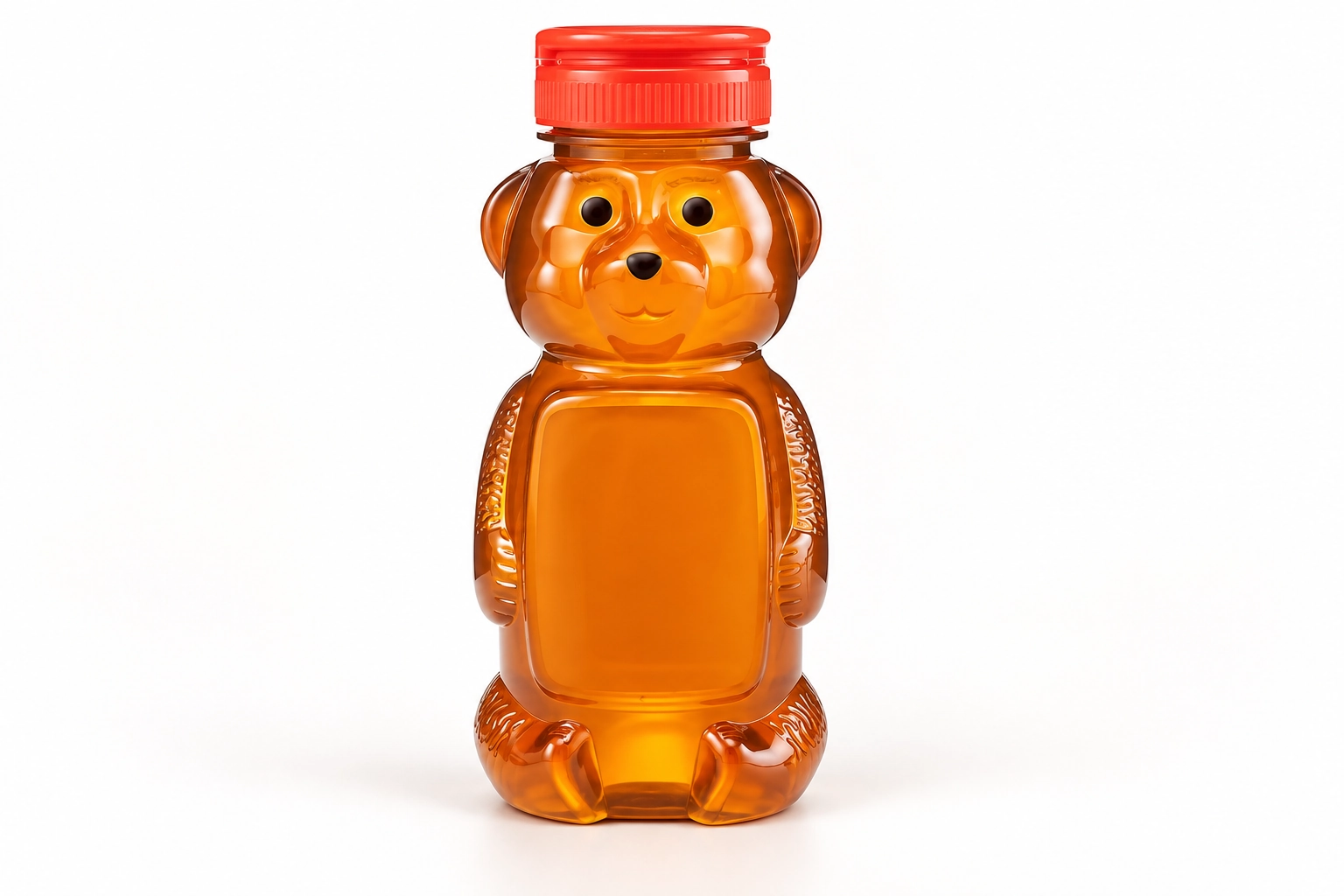
250 ml PET Honey Bear Bottle
Model G-41 is a clear 250 ml PET honey bear bottle with a compact front label panel and matched 38-400 PP flip-top cap.
1 option
View specifications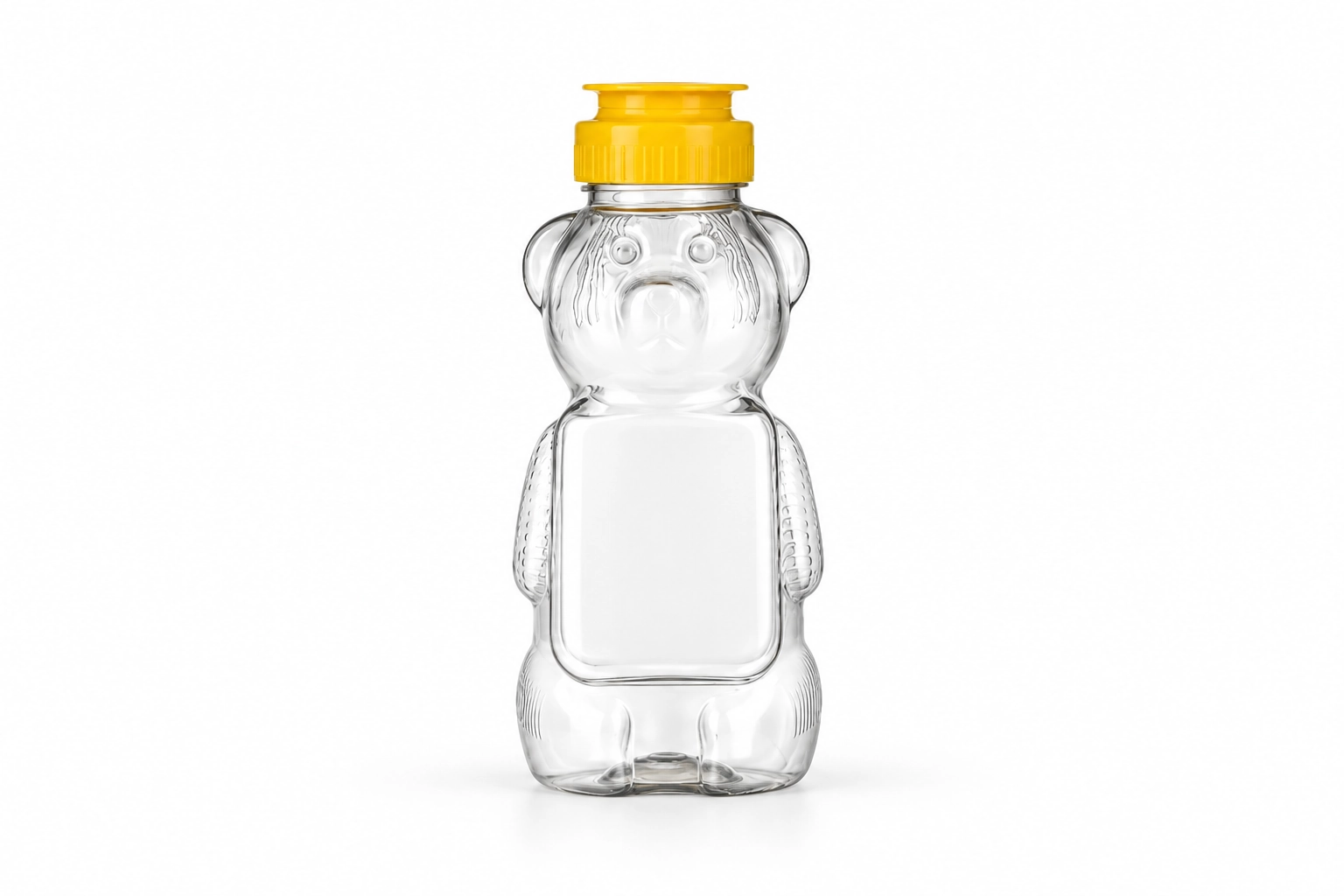
320 ml PET Honey Bear Bottle
Model G-05 is a clear 320 ml PET honey bear bottle with a defined front label panel and matched 38-400 PP flip-top cap.
1 option
View specifications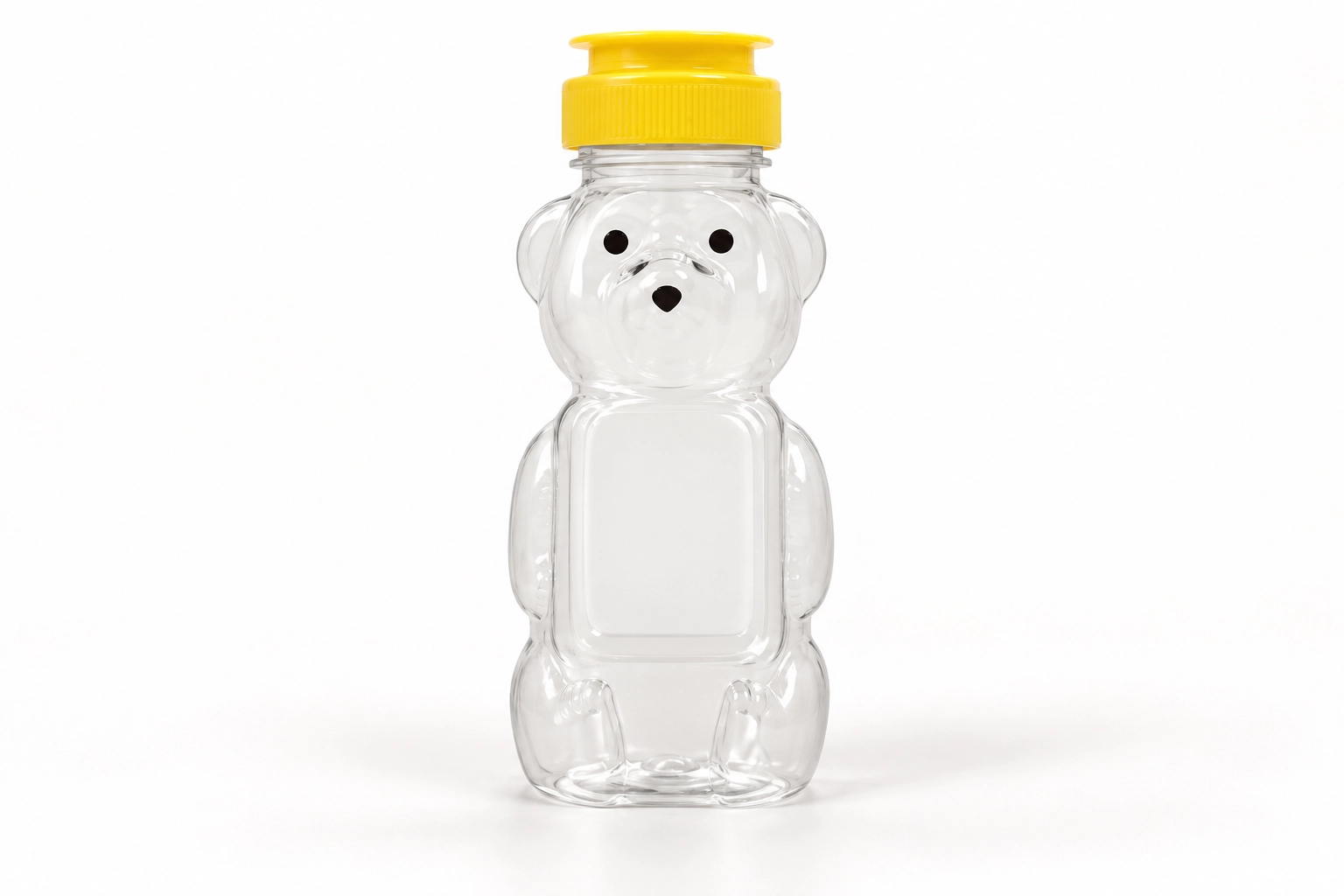
PET Honey Bear Bottle Options
Choose from five clear PET honey bear bottle models in 60–360 ml water capacities, with approximately 84–500 g reference honey fills.
5 options
View specifications