
Filling & Production
Optimizing Plastic Honey Bottles for High-Speed Automated Filling Lines
Diagnose bottle warping, line jams, cap spin and induction-seal failures on automated honey lines by checking the product, pack, machine and process.
Written by
Gracepack Honey Packaging Editorial Team
Packaging Content & Product Education. We turn the questions customers ask us about honey bottles, jars, caps, samples, filling and export packing into practical packaging guides.
Technical review by
Gracepack Honey Packaging Project Team
Container, Closure & Packing Review. Our project team checks guidance about model selection, fill-weight references, cap compatibility, samples, carton protection and delivery planning.
Reviewed October 10, 2026. Reviewed against Gracepack's current bottle, closure, sampling, packing, documentation and export-project workflow. Final compliance, filling-process and shelf-life approval remains specific to the selected packaging, honey product and destination market. See our quality and document approach.
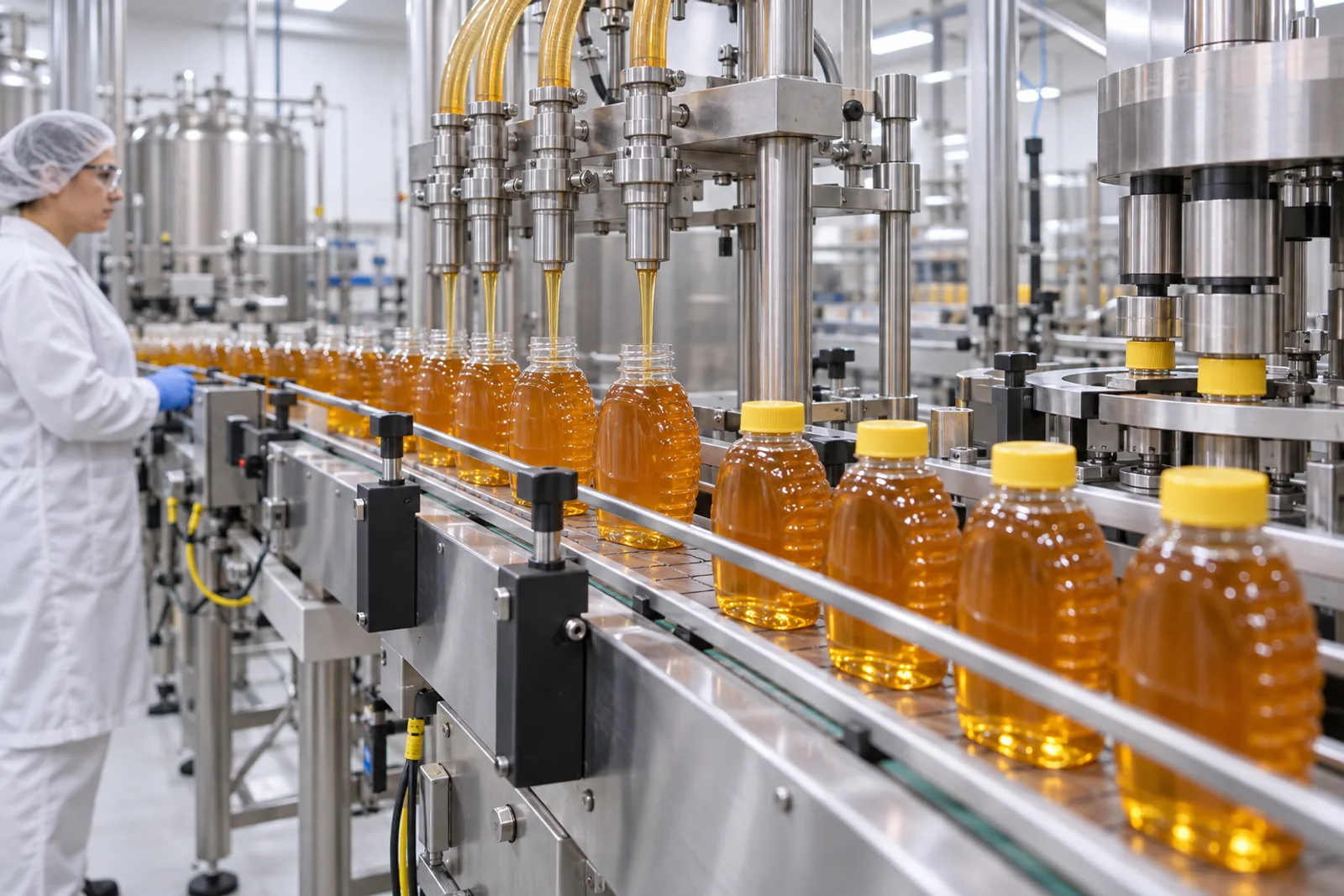
A high-speed honey line rarely fails for one reason. A bottle that panels after cooling may be outside its validated thermal window; a repeatable starwheel jam may start with bottle geometry or guide settings; a loose foil may trace to honey on the sealing land, insufficient cap torque or an incompatible liner. The fastest route back to stable production is to locate the station, preserve the settings and separate product, package, machine and process causes before changing anything.
Quick Diagnostic: Start With the Symptom and the Station
Treat the line as a sequence of interfaces. The container must leave the unscrambler upright, pass guides and transfers without excess pressure, locate consistently under the filler, accept a closure at a repeatable height, and present a clean, flat sealing land to the induction sealer. A defect seen at the end of the line may have started several stations earlier.
Before adjusting the process, mark the station where the symptom first becomes visible. Save the current recipe, guide positions, capper settings and sealer settings. Retain examples from an approved component lot and the suspect lot. That evidence prevents a series of well-intentioned adjustments from hiding the original cause.
| Symptom | First place to check | Possible package cause | Possible machine or process cause | Low-risk verification |
|---|---|---|---|---|
| Sidewall panels inward after cooling | Immediately after capping and again at room temperature | Bottle is not validated for the time-temperature history; wall distribution or vacuum response is inadequate | Fill temperature, headspace, capping timing or cooling creates excessive vacuum | Run instrumented samples through the same fill and cooling sequence; compare sealed and unsealed controls |
| Base rolls out or the bottle rocks | Filler discharge and cooling conveyor | Base geometry, material distribution or support ring is unsuitable | Excess fill, hot base contact, transfer impact or poor cooling support | Measure base change at ambient temperature and compare empty, filled-unsealed and filled-sealed samples |
| Jams repeat at one starwheel pocket | First recurring contact point | Diameter, ovality, flash, center of gravity or stiffness varies | Pocket, timing screw, rail or transfer gap is misaligned | Mark bottles by lot and pocket; run approved and suspect bottles without changing settings |
| Cap spins or sits crooked | Cap chute and capping head | Wrong finish, damaged thread, cap distortion or liner interference | Head height, downforce, chuck wear or torque setting is wrong | Hand-start matched caps, inspect thread engagement, then check application and removal torque |
| Foil bonds on only part of the land | Capping station before the induction sealer | Uneven sealing land, wrong liner seal layer or closure mismatch | Low or uneven cap pressure, off-center container, unsuitable power-speed window | Inspect the land before capping and compare seals across controlled torque and sealer settings |
| Honey strings or drips around the neck | Filling nozzle cutoff | Opening or bottle height creates poor nozzle clearance | Nozzle cutoff, suck-back, fill profile or product temperature is unstable | Observe in slow motion and weigh drips while changing one controlled parameter |
Map the Failure Before Changing the Bottle
Use four cause groups: product, package, machine and process. Product variables include temperature, moisture, crystallization and entrained air. Package variables include bottle geometry, wall distribution, neck finish, cap, liner and component variation. Machine variables include worn chucks, rails, starwheels, sensors and transfer timing. Process variables include recipes, line balance, accumulation, capping delay and cleaning intervals.
A repeatable defect tied to one pocket, head or guide usually points toward equipment setup or wear. A defect that follows one bottle or closure lot across several stations deserves a component investigation. A failure that grows as the shift progresses may involve product temperature drift, honey buildup, capper heat, liner conditioning or accumulation pressure.
Change one variable at a time whenever production safety allows. If operators simultaneously warm the honey, slow the conveyor and tighten the capper, a good result cannot identify the corrective action. Record the change, sample size, defect count and stop time so the next shift can reproduce the result.
- Define the first station where the failure is visible, not only where the line stops.
- Compare an approved bottle-and-closure lot with the suspect lot under the same recipe.
- Inspect failure patterns by filler head, starwheel pocket, capping head and time in the shift.
- Preserve failed packs and settings until the root-cause review is complete.
- Escalate safety, food-contact and equipment-guarding issues through the plant’s procedures.
The Viscosity Factor: Fill Temperature, Nozzle Cutoff and Wall Rigidity
Honey viscosity can change sharply with temperature and also varies with moisture, botanical source and crystallization. Most liquid honeys behave as Newtonian fluids under many test conditions, although some varieties and crystallized systems show shear-dependent behavior. A peer-reviewed review of honey rheology therefore supports measuring the honey you actually run rather than assigning every honey one flow model.
Build a product-specific operating window. Record viscosity or a repeatable plant flow measure at the temperature entering the filler, not only the tank set point. Use the lowest validated temperature that provides the required fill accuracy and cutoff while protecting product quality and keeping the container and closure inside their limits. A universal 40–45°C rule is not a substitute for this work.
For viscous products, a slow-fast-slow profile can reduce the initial splash and soften cutoff, provided the filler supports controlled profiling. A positive shutoff or suck-back nozzle can reduce stringing. Set nozzle clearance for the real bottle height and fill level; a nozzle that is too high encourages splash, while one that follows too deeply can contact product or the container.
The bottle experiences a time-temperature history. Hot honey enters the body, heat moves into the sidewall and base, the closure is applied, and the headspace changes as the pack cools. A resin name alone does not define performance. Bottle weight, geometry, stretch history, wall distribution, exposure time and cooling determine whether a PET container remains stable.
Why Plastic Honey Bottles Warp, Panel or Become Unstable
Use the shape of the defect to identify the load. Inward sidewall panels that appear during cooling suggest vacuum or reduced stiffness. A base that pushes down and rocks may have softened or redistributed under the fill and conveyor conditions. Buckling near the shoulder may involve top load, capper downforce or accumulated bottles pressing through a weak section. These are different failure mechanisms and require different tests.
Structural ribs can improve handling stiffness, but ribs do not automatically make a bottle suitable for warm filling. A controlled vacuum panel can absorb cooling contraction; an ordinary decorative panel may crease instead. The base needs a stable contact ring and enough clearance that small thermal changes do not create a high point. For a new shape, review the shoulder, sidewall, label panel and base as one structure.
Special heat-set PET and vacuum-management systems exist for demanding hot-fill processes, but they are distinct package designs. Liquid-nitrogen dosing may also be considered on certain engineered lines; it is not a default cure for an unqualified honey bottle and requires pressure, headspace, equipment and safety validation. Begin with the actual bottle limit, fill temperature, headspace, capping time and cooling profile.
A practical deformation trial
- Measure empty bottle height, key diameters, base clearance and neck condition.
- Fill at the lowest, nominal and highest credible product temperatures using the intended headspace.
- Include filled-unsealed controls to separate thermal effects from cooling vacuum.
- Check dimensions, paneling, base rock, cap seating and leakage after the packs reach room temperature.
- Condition samples for the storage and distribution extremes expected in the destination market.
Where Jams Begin on an Automated Honey Bottling Line
A jam is often the final result of lost spacing or rising back pressure. At the unscrambler, examine whether a flexible or top-heavy bottle consistently exits upright. At transfers, inspect dead plates, gaps and height changes. At guides, leave enough control to prevent tipping without squeezing the body. At the timing screw and starwheel, confirm that the actual bottle diameter and profile match the change parts.
Line balance matters more than the nameplate speed of one machine. If the filler releases bottles faster than the capper can accept them, accumulation grows until the side guides, bottle shoulders or closures carry loads they were never meant to carry. Sensors and buffer logic should slow upstream stations before bottles become a solid column.
Honey makes small faults worse. A string from the nozzle can wet the finish, body or conveyor. Sticky residue collects dust, changes friction and can prevent a bottle from sliding into a pocket. Use a validated sanitation plan for external machine surfaces and product-contact parts; casual water spraying around electrical and food-packaging equipment is not a substitute for controlled cleaning.
| Line area | Bottle-related question | Machine or process check |
|---|---|---|
| Unscrambler and infeed | Can the bottle orient and stand reliably at production speed? | Orienter tooling, discharge spacing, static and bottle-to-bottle friction |
| Conveyor and transfers | Is the base contact ring stable and free from molding interference? | Rail height, transfer gap, dead plate, belt speed and accumulation pressure |
| Timing screw and starwheel | Do body diameter, ovality and profile match the change parts? | Phasing, pocket wear, centerline and handoff timing |
| Filler | Is bottle height and neck location repeatable under the nozzle? | Lift table, nozzle clearance, cutoff, drips and head-to-head variation |
| Cap feed and capper | Does the full finish match the cap and liner? | Chute orientation, cap-present sensor, chuck wear, head height and torque |
| Labeler and case packer | Does the panel stay stable and does the pack clear guides? | Container spacing, label pressure, carton pattern and compression |
Precision Neck Finishes: 38-400, 38-410 and the Complete Closure System
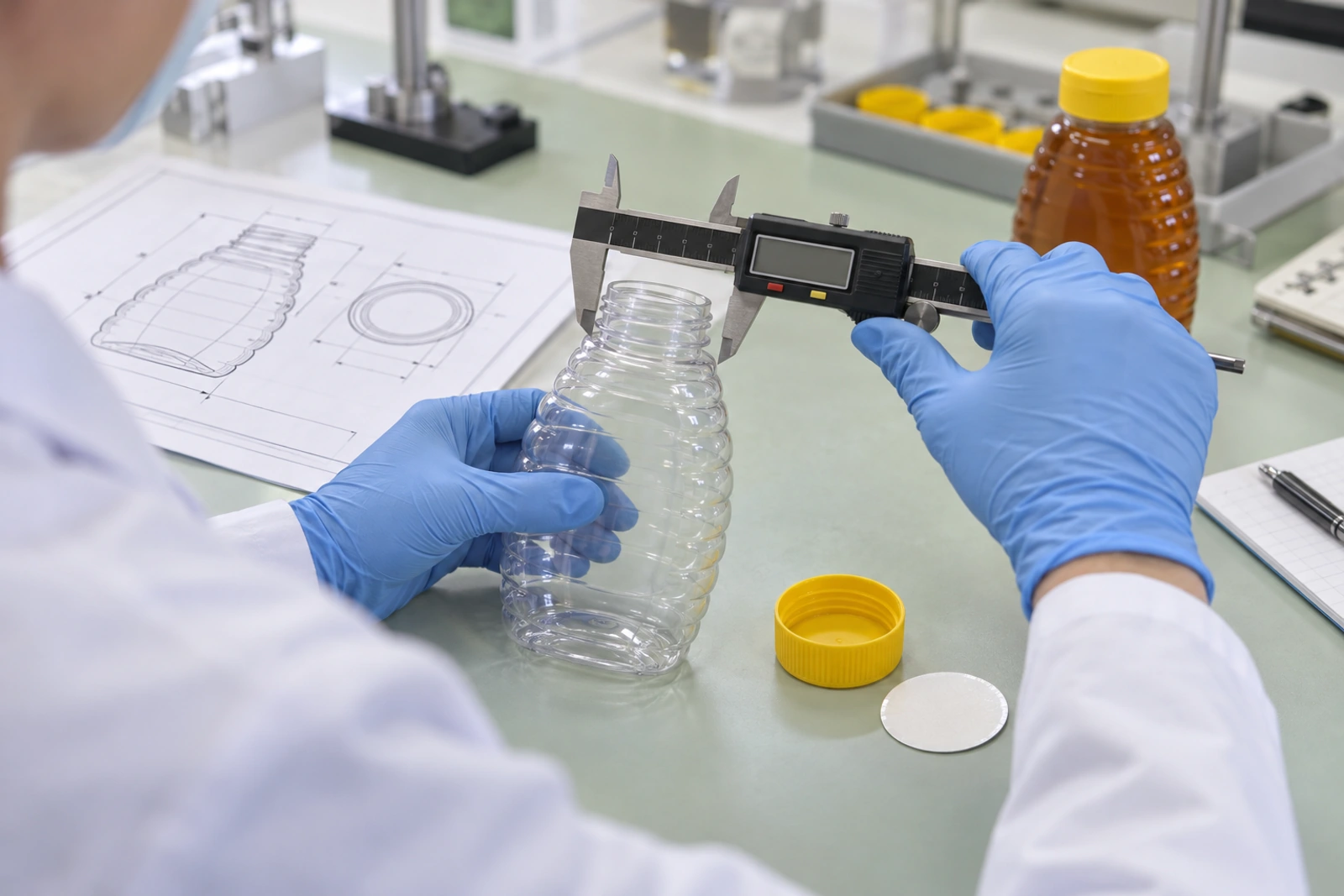
A neck finish designation is more than an opening diameter. In a designation such as 38-400, the first number identifies the nominal thread diameter in millimeters and the second identifies the finish series. Two finishes can share the 38 mm designation while differing in thread and finish geometry. A cap that appears to start on the neck can still cross-thread, bottom out, spin or fail to compress its liner correctly.
Treat 38-400 and 38-410 as separate specifications. The cap drawing, bottle drawing, sealing land, skirt clearance, liner construction and capping method all matter. Diameter alone does not establish compatibility, and neither a hand fit nor a few successful closures proves repeatable high-speed application.
Many Gracepack PET honey bottles list a 38-400 neck finish, while other models use different finishes. Confirm the selected model and compare the compatible honey bottle caps and jar lids as complete assemblies. If you plan to reuse a locally sourced cap, send its drawing or a physical sample before approving the bottle.
Use assembled samples for the line trial. Record cap seating, thread engagement, application setting, removal torque and leakage after conditioning. Where the cap carries a liner or valve, verify that the insert remains correctly located during feeding and capping.
Preventing Seal Failure After Capping
For an induction seal, the foil needs even contact around a clean sealing land. The liner seal layer must be compatible with the container material, and the cap must apply sufficient, repeatable pressure while the foil is heated. Power cannot compensate for a crooked cap, damaged land or incompatible liner.
Honey on the land is a prevention problem first. Stabilize nozzle cutoff and bottle positioning so product does not reach the finish. Inspect and segregate contaminated packs under the plant’s hygiene procedure instead of relying on an improvised air blast that can spread residue. If contamination remains a recurring event, trace it back to fill profile, nozzle condition, bottle height or transfer motion.
Application torque is a process variable, not a visual judgment. Enercon’s cap-torque demonstration shows how inadequate torque can produce an incomplete induction seal even when the container, liner, power and line speed remain the same. Establish the target with the closure supplier and verify application and removal behavior with a calibrated method.
| Seal symptom | Probable causes | Next check |
|---|---|---|
| Partial bond on one side | Cocked cap, uneven land, low or uneven pressure, off-center passage | Inspect cap seating and land flatness; map the defect orientation by capping head |
| No bond | Wrong liner seal layer, insufficient energy, excessive speed or missing foil | Confirm component identity and cap feed before adjusting the power-speed window |
| Scorched or discolored liner | Excess energy, slow conveyor or inappropriate liner | Verify actual conveyor speed and repeat across controlled power settings |
| Wrinkled foil | Liner movement, uneven pressure, land geometry or heat distribution | Inspect liner placement before capping and compare matched components |
| Liner stays in the cap | No seal or poor adhesion to the container | Check material compatibility, land cleanliness, torque and energy |
| Seal lifts after conditioning | Marginal bond, product exposure, stress or unsuitable structure | Repeat leakage and peel review after defined storage and transport conditioning |
FAT and Line-Trial Protocol for a New Honey Bottle
A desktop fit check is useful, but it cannot predict commercial uptime. Plan a production-representative trial with the actual honey, bottle, cap, liner, label and shipping pack. Include the highest credible fill temperature and target line speed. If the line will run several honey varieties, test the condition most likely to challenge filling and cutoff.
Define acceptance criteria before the run. A trial without a sample size, defect definitions or stop-time record can produce a persuasive demonstration without proving capability. The bottle supplier, closure supplier, equipment supplier and plant quality team should agree which results each party owns.
For factory acceptance testing, send enough production-representative components to expose variation and confirm change parts. For site acceptance, repeat the critical checks with installed utilities, operators and plant conditions. Keep the approved bottle, closure, drawings, settings and test record together as the production baseline.
- Honey variety, moisture or relevant flow specification, crystallization state and product lot.
- Product temperature at the tank, filler inlet, nozzle and capping station where practical.
- Bottle, cap and liner model, material, drawings and component lot numbers.
- Target net weight, fill-level range and headspace.
- Target and actual bottles per minute at each major station.
- Nozzle program, cutoff behavior, drips and fill accuracy by head.
- Capper head, application setting, cap seating and removal torque where applicable.
- Induction-sealer power, conveyor speed and results by seal defect type.
- Jams and stops by station, time, duration, pocket or head.
- Bottle dimensions, paneling, base rock, leakage and appearance after cooling.
- Results after agreed storage, handling and transport conditioning.
Gracepack Bottle and Closure Controls: Drawings, Samples and Agreed Tolerances
For an automated line, Gracepack treats the bottle and closure as an assembly rather than two catalog items. The review starts with the intended honey fill, temperature, net weight, cap or dispensing requirement and line conditions. Dimensioned drawings and physical samples are used to confirm the full neck finish, sealing surface, label area and overall envelope before production.
The quotation and approved specification can record material, color, dimensions, agreed tolerances, matched cap and liner, seal details and packing configuration. The inspection plan can cover appearance, dimensions, bottle weight, cap application, filled-pack leakage and transport checks using an agreed procedure. A retained approved sample gives production and purchasing teams a physical reference for repeat orders.
The available ISO 22000 certificate identifies Cixi Yangen Plastic Industry Co., Ltd. and a scope covering the processing of food-packaging plastic bottles and caps. PET sample reports are also available for review. These documents must be read against the named company, submitted sample, test method and intended pack; they do not replace a line trial or certify every catalog item by association. Review the available quality documents and sample reports for that defined scope.
This container-focused review complements the work of the filling-equipment supplier. Gracepack can help establish the bottle-and-closure specification and prepare samples; the plant and equipment supplier remain responsible for guarding, machine settings, validated operating limits and line acceptance.
What to Send Before Requesting Production Samples
A useful inquiry reads like a short engineering brief. It lets the packaging team select a realistic starting bottle, identify missing closure information and prepare samples that answer a production question. A photograph alone may show the shape you like, but it does not define the fill, neck or line interface.
If you are qualifying wholesale plastic honey bottles for an automated filling line, send the target fill weight, honey condition, product temperature, line speed, existing closure information and any failure photographs or video. Gracepack can review the proposed container-and-closure specification and prepare samples for your trial. Final machine settings should be validated with your filling-equipment supplier.
- Target bottle shape, nominal capacity and commercial honey net weight.
- Honey variety, moisture target, crystallization state and normal consumer-use temperature.
- Product temperature at filling and the expected delay before capping or cooling.
- Target bottles per minute and the make or type of filler, capper and sealer.
- Existing cap drawing, liner specification or physical closure sample.
- Preferred neck finish, dispensing outlet and tamper-evidence requirement.
- Photographs or video showing the first point of the current failure.
- Label method, carton configuration and shipment orientation.
- Trial quantity, annual demand, destination country and required date.
High-Speed Honey Bottling Line FAQs
Why do PET honey bottles panel after warm filling?
Paneling usually develops when the bottle loses stiffness during filling and then experiences vacuum as the sealed product and headspace cool. Bottle design, actual product temperature, exposure time, headspace, capping timing and cooling all matter. Compare sealed and unsealed controls and use limits established for the exact bottle rather than a generic PET temperature.
Can 38-400 and 38-410 caps be interchanged?
Do not assume they can. The 38 identifies a nominal thread diameter, while 400 and 410 identify different finish series. Thread engagement, finish height, sealing land, cap skirt and liner compression must match. Confirm the drawings and then test the bottle, cap and liner as an assembled pack.
What causes a cap to spin without tightening?
Common causes include an incompatible or damaged neck finish, cross-threading, cap distortion, worn capping chucks, incorrect head height, inadequate downforce or a torque setting that does not suit the closure. Determine whether the symptom follows a component lot or a particular capping head before changing settings.
Why does an induction seal bond on only one side?
A one-sided bond often indicates uneven liner contact caused by a cocked cap, uneven sealing land, inadequate application pressure or misalignment through the sealer. Confirm the liner seal layer matches the container material, inspect the land, and evaluate cap torque before increasing induction power.
How can honey stringing cause bottling-line jams?
A honey string can wet the finish, shoulder, conveyor or starwheel. Sticky residue changes sliding friction, collects debris and can prevent bottles from locating cleanly in guides or pockets. Improve nozzle cutoff and bottle positioning, then clean affected equipment under the plant’s validated sanitation procedure.
Should a bottler increase honey temperature to improve line speed?
Only inside a validated product and packaging window. Higher temperature can reduce viscosity, but it may also affect honey quality, increase drips and soften the bottle or closure. Measure the actual honey at the filler and use the lowest temperature that delivers stable, accurate filling.
What should be recorded during a honey-bottle line trial?
Record the honey and component lots, product temperature, target fill and headspace, line speed, filler and capper settings, torque where applicable, induction settings, defects by station, stops, leakage and bottle condition after cooling. Define the sample size and acceptance criteria before the run.
How do I know whether the bottle or the machine is causing the jam?
Run approved and suspect bottle lots under the same saved setup, then map jams by station, starwheel pocket and time. A fault that follows one component lot suggests a packaging variable; a fault tied to one pocket, head or transfer suggests setup or wear. Change one variable at a time.
Related Products
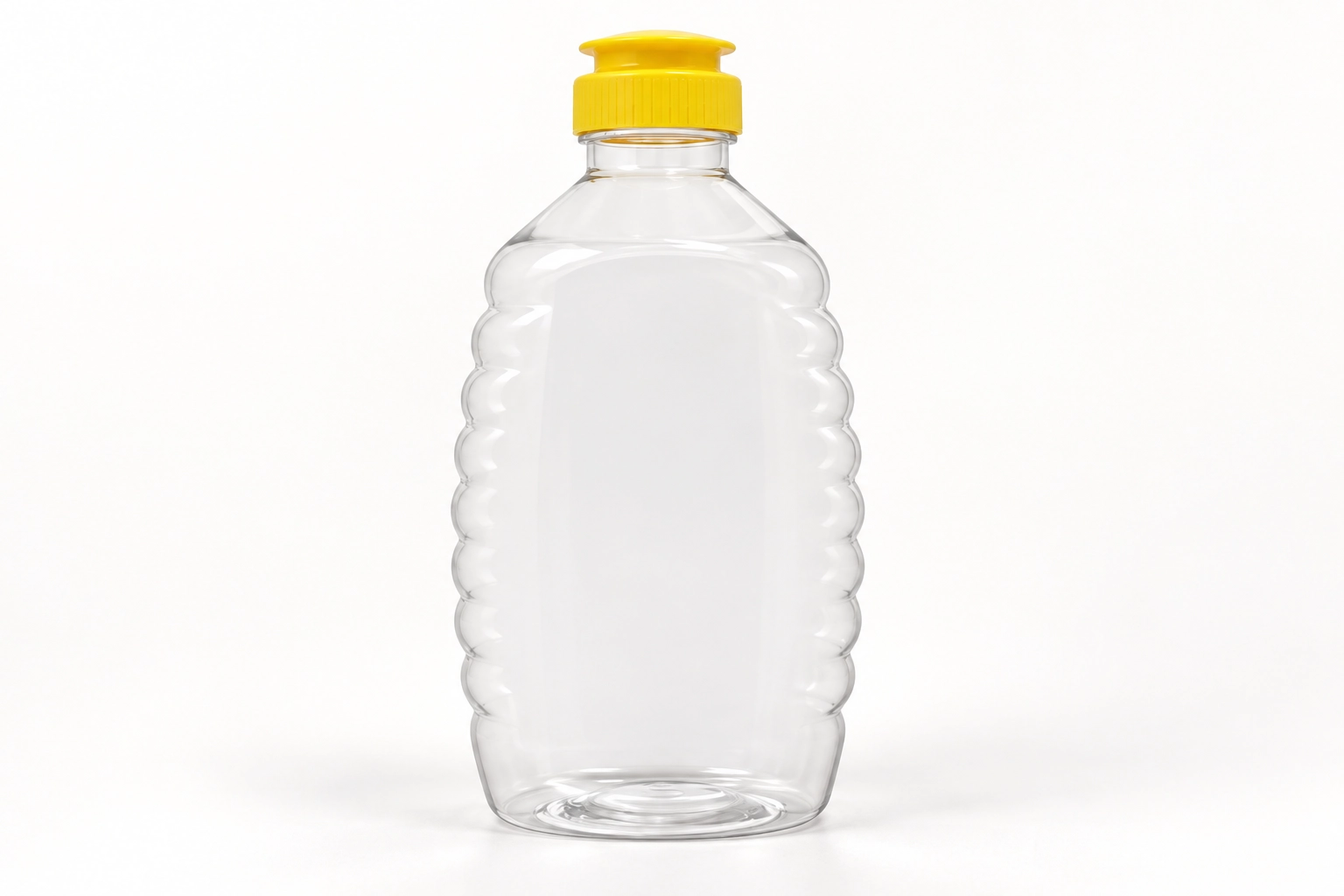
Ribbed PET Honey Bottle Series
Choose from nine clear ribbed PET honey bottle models in 70–740 ml capacities for approximate 100 g–1 kg honey fills.
9 options
View specifications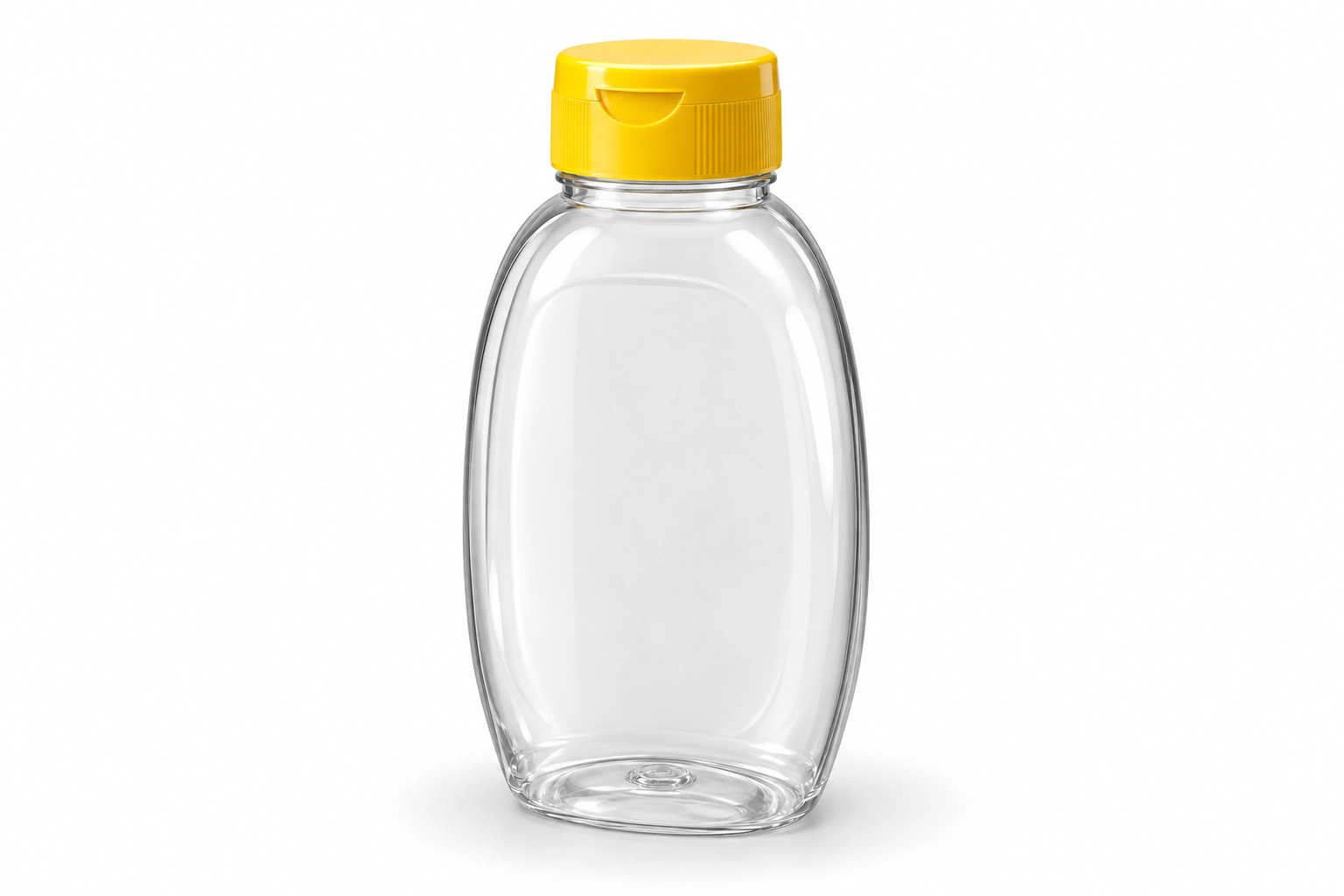
360 ml PET Honey Bottle
Model A54 is a clear 360 ml PET bottle developed for approximately 500 g honey packs.
1 option
View specifications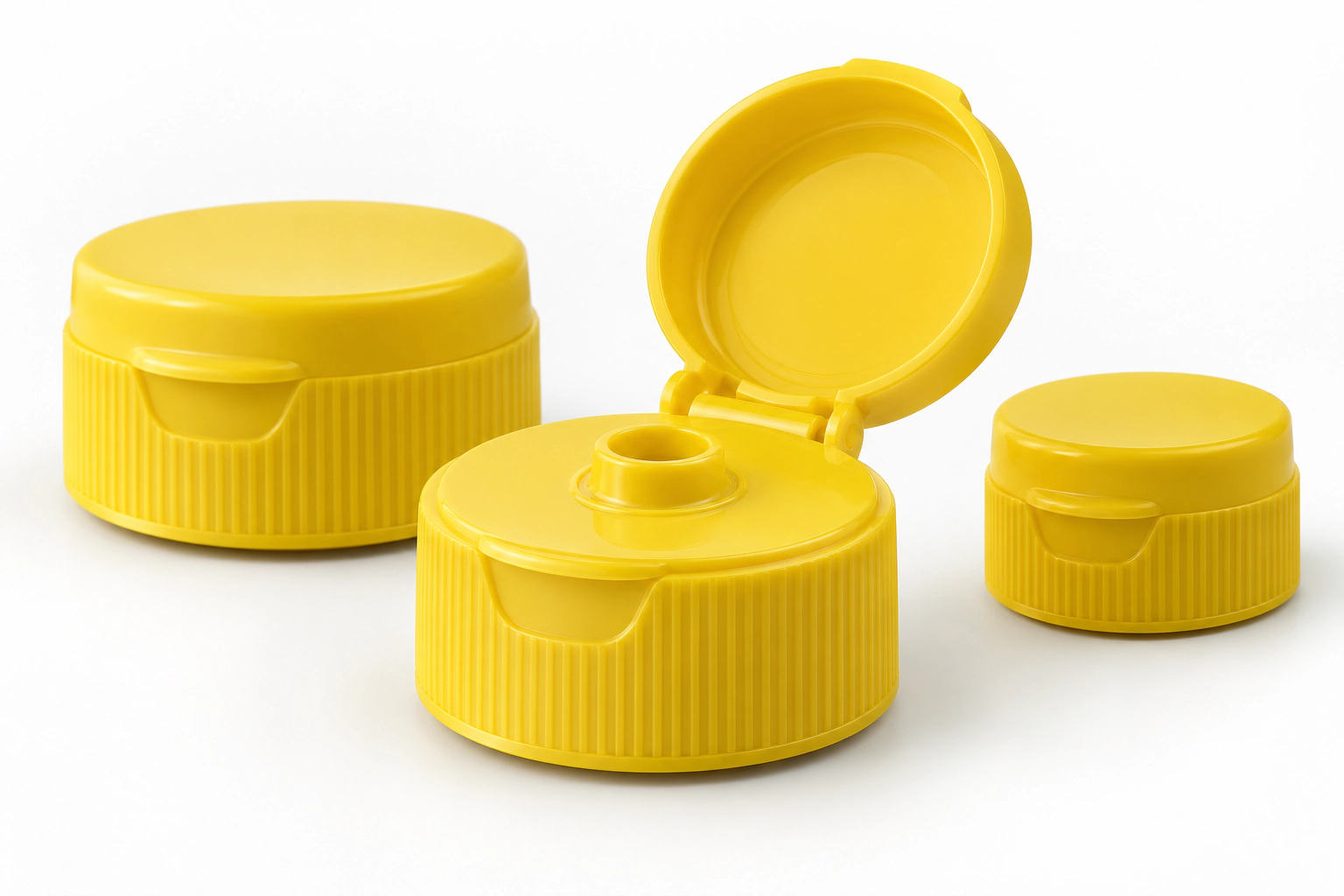
PP Flip-Top Caps for Honey Bottles
We supply PP flip-top caps for compatible upright PET honey squeeze bottles.
1 option
View specifications